第二十章:国防
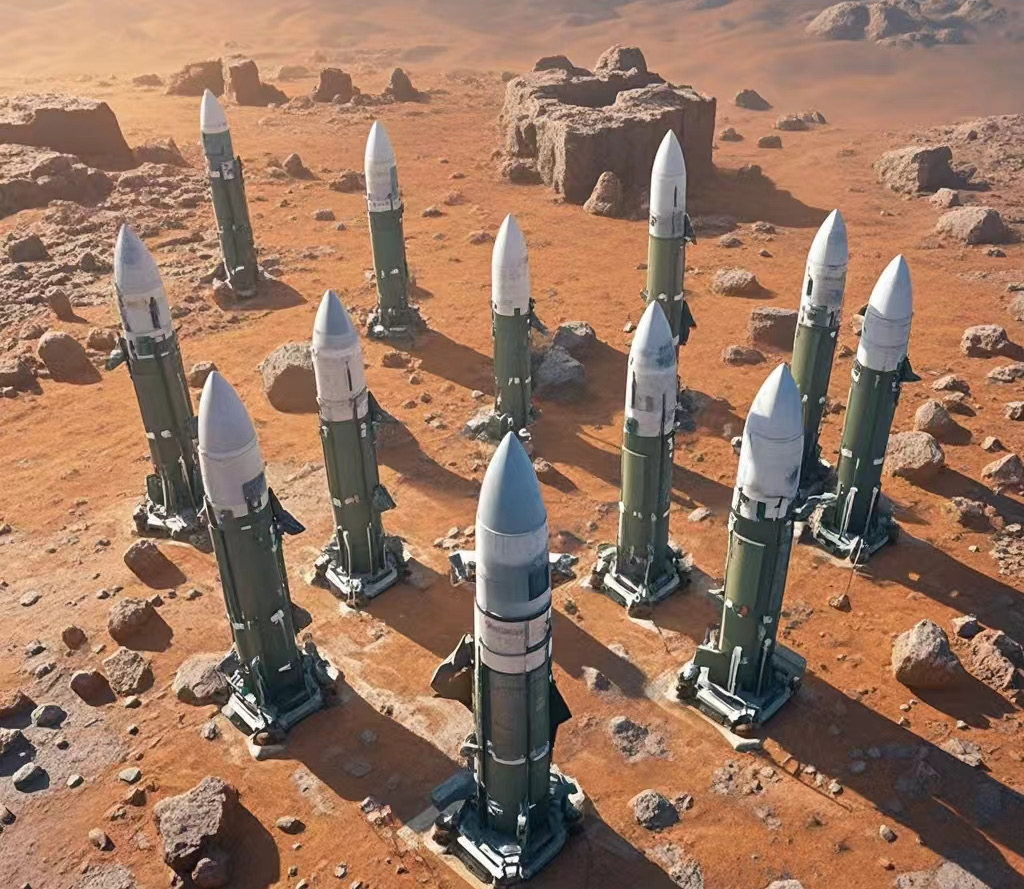
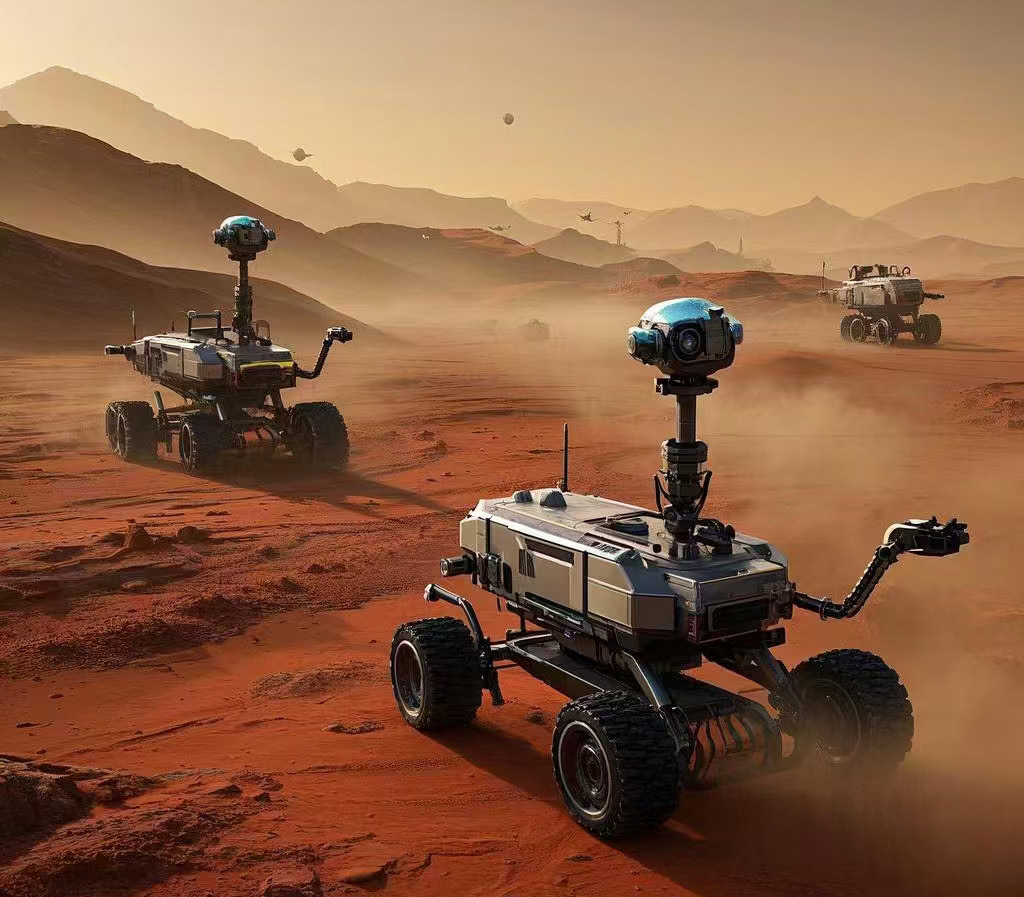
火星联邦的国防政策将侧重于建立一支由人工智能机器人组成的防御力量,以维护火星的独立性和主权。
1. 国防力量建设:火星联邦的安全保障
随着火星联邦的成立和城市化进程的推进,建立一支强大的国防力量已成为确保火星长期稳定和安全的关键。火星的环境复杂且充满未知的威胁,地面和空中机器人将成为火星联邦国防力量的核心。这些机器人将通过高度自动化的系统,承担起日常的安全巡逻、边境监控和防御任务,成为火星联邦防御体系中的中坚力量。首先,地面机器人将负责火星城市和基地的日常巡逻任务,确保没有未经授权的人员第二部分:建立或物品进入保护区。这些机器人配备先进的传感器和自动化巡逻系统,可以实时监控火星环境中的异常活动。它们将与地面建筑、资源开采点以及居住区等区域的安全系统连接,确保所有区域都处于高效的监控之下。地面机器人不仅能进行常规的安全巡逻,还能够在突发情况下迅速做出反应,执行应急防御任务。空中机器人则会负责火星上空的边境监控和空中防御任务。由于火星的稀薄大气层和恶劣的天气条件,空中监控变得尤为重要。空中机器人能够利用火星独特的大气环境进行快速机动,并通过卫星与地面机器人协调行动。它们的任务不仅仅是防御外部威胁,还包括提供火星联邦内部的空中支援,保护关键设施和人员的安全。总的来说,火星联邦的国防力量建设不仅仅是为了应对外部威胁,更是为了在一个陌生且不稳定的星球上确保社会秩序和资源安全。地面和空中机器人的协同作战将形成一套完善的防御体系,有效地保护火星联邦的长远发展。
2. 国防技术研发:火星联邦的未来防御创新
为了应对火星环境中的多重安全挑战,火星联邦将大力投资于国防技术的研发。这些技术不仅涵盖新型传感器和自动化武器系统,还包括通信技术等多方面内容,旨在提高火星联邦的防御能力,并确保其能够应对来自外部和内部的各种威胁。首先,火星的稀薄大气和不稳定的气候环境对传感器技术提出了独特的挑战。火星联邦将研发能够适应这些条件的高精度传感器,实时监测火星表面的活动。这些传感器将被部署在机器人和其他国防设施中,能够精确识别潜在的威胁。传感器不仅能够探测到传统的威胁,还可以利用先进的算法分析环境数据,识别出如气候变化、地质运动等可能影响火星安全的风险。在自动化武器系统方面,火星联邦将研发具备高精度打击能力的无人作战平台。由于火星的大气稀薄,传统的武器系统难以适应火星的特殊环境。通过引入先进的激光武器、等离子体武器等新型技术,火星联邦能够在不依赖重型地面装备的情况下有效进行防御。这些自动化武器系统将与地面机器人和空中机器人的网络协同作战,确保火星联邦在面对威胁时具备强大的反应能力。此外,火星联邦还将加大在通信技术方面的研发,确保各类防御系统的高效协调。由于火星与地球的巨大距离,及时和高效地通信是一个至关重要的技术难题。火星联邦将研发低延迟、高容量的卫星通信技术,以确保各个防御单元之间的信息传递不会受限,从而保障国防系统的整体作战能力。综上所述,火星联邦的国防技术研发将围绕适应火星独特环境的高科技手段展开。这些技术的研发和应用,将大大增强火星联邦的安全防护能力,为火星的长期稳定发展提供坚实的保障。
3. 防御系统
火星联邦将部署一系列自动化防御系统,包括定向能武器和拦截技术,以保护火星表面免受陨石和小行星的威胁。这些系统将由人工智能机器人控制,确保快速准确地反应。火星安全与地球防御的协同火星联邦的安全不仅局限于火星本身,还包括与地球的协同防御。1.信息共享机制在确保火星与地球协同防御方面,信息共享机制是最基础也是最关键的一环。火星联邦计划与地球建立一个高度集成的安全信息共享平台,该平台不仅仅是一个技术工具,更是两者之间互信的桥梁。通过这一平台,火星和地球能够实时交换关于潜在威胁的数据,例如小行星撞击的预警、太阳风暴的预测,以及轨道碎片可能造成的碰撞风险。这种数据交换将涵盖从火星轨道探测器到地球空间站的多源数据,包括雷达信号、红外探测、光学成像等多维度信息。这种信息共享机制的优势不仅体现在威胁预警的速度上,更体现在双方应对策略的协调性上。例如,在探测到某颗小行星有潜在撞击风险后,火星和地球的科学团队可以立即通过平台开展联合分析,计算可能的影响范围和最优防御方案。同时,这一平台还将包含基于人工智能的分析系统,能够自动检测异常信号,并为决策者提供可靠建议。第二部分:建立此外,为了确保数据的安全性与完整性,信息共享平台将采用先进的区块链技术和量子加密方法。这不仅能够防止外部的网络攻击,也能确保信息在不同节点之间的传输过程不会被篡改或延迟。最终,通过这一机制,火星与地球的协同防御将更加高效和精准,为太阳系的整体安全提供有力保障。2.联合防御项目为了更好地应对潜在的共同威胁,火星联邦计划与地球国家展开联合防御项目。这些项目的核心目标是开发和部署覆盖太阳系的高效防御系统,重点包括天基拦截器和早期预警卫星等关键技术。这些系统不仅是针对火星和地球本身的安全需求设计的,还考虑到整个太阳系范围内可能存在的威胁,如小行星撞击和其他空间灾害。天网拦截器是一项战略重点。火星和地球计划共同研发一种能够在太空中快速部署的拦截武器。这些拦截器可以在太空中巡航,随时待命以应对可能的撞击威胁。一旦探测到危险的天体轨迹,拦截器可以迅速出击,将其摧毁或改变其轨道,从而保护火星和地球的居民安全。早期预警卫星则扮演着哨兵的角色,这些卫星分布在火星与地球之间,以及其他重要的太阳系节点,通过高精度传感器实时监控太空环境。联合防御项目的意义不仅在于提高技术水平,还在于建立火星与地球的紧密合作关系。双方将定期举行联合演习,模拟各种可能的威胁场景,测试系统的响应速度和协调能力。这些演习还可以发现系统的漏洞,并为后续改进提供依据。通过这一系列的努力,火星与地球将形成一个互为依托的安全屏障,共同面对未知的宇宙挑战。3.技术与资源合作火星与地球之间的技术与资源合作是确保双方协同防御能力的核心所在。在防御技术方面,火星联邦计划与地球国家分享其在太空探测器、轨道防御系统,以及高能激光武器等领域的最新研发成果。同时,火星也将从地球获取成熟的军事技术和工程经验,例如导弹拦截系统的设计思路和高精度导航系统的实施方法。在资源层面,火星丰富的稀有矿物和地球广泛的工业能力将形成互补关系。火星可以提供地球急需的稀有金属,用于制造更强大的防御设备,而地球则可以通过其完善的制造体系,将这些资源转化为实际的防御能力。例如,地球工厂可以为火星量产先进的探测卫星,而火星则利用其轨道资源和低重力优势,将这些设备高效部署到太空。此外,人员培训也是合作的关键一环。双方计划定期交换防御人员,让地球和火星的科学家、工程师和军队指挥官在彼此的环境中进行实际操作与研究。这种人员的跨星交流,不仅可以提升技术能力,还能为双方的文化交流与信任建立奠定基础。同时,火星和地球的高校和研究机构也将联合开展关于太空防御技术的项目,为未来培养更多的专业人才。通过技术、资源和人员的全方位合作,火星与地球将形成强大的防御联合体,既能保护自身的安全,也能为太阳系的长久和平提供可靠保障。
4. 无人机防御网络
火星联邦将建立一个由无人机组成的防御网络,这些无人机能够在低空进行快速部署,对潜在的空中威胁进行监测和拦截。无人机将配备先进的传感器和通信设备,以实现与地面防御系统的协同作战。
Chapter 20: National Defense
The Mars Federation's national defense policy will focus on establishing a defense force composed of AI robots to safeguard Mars's independence and sovereignty.
1. National Defense Force Construction: The Mars Federation's Security Guarantee
With the establishment of the Mars Federation and the advancement of urbanization, building a powerful national defense force has become key to ensuring Mars's long-term stability and security. Mars's environment is complex and filled with unknown threats. Ground and aerial robots will become the core of the Mars Federation's defense force. These robots, through highly automated systems, will undertake daily security patrols, border monitoring, and defense tasks, becoming the backbone of the Mars Federation's defense system. First, ground robots will be responsible for daily patrol tasks at Mars cities and bases, ensuring that no unauthorized personnel Part II: Establishment or items enter protected areas. These robots are equipped with advanced sensors and automated patrol systems that can monitor abnormal activities in the Mars environment in real time. They will connect with security systems at ground buildings, resource extraction sites, and residential areas, ensuring all areas are under efficient surveillance. Ground robots can not only conduct routine security patrols but also react quickly in emergency situations, executing emergency defense tasks. Aerial robots will be responsible for border monitoring and air defense tasks above Mars. Due to Mars's thin atmosphere and harsh weather conditions, aerial monitoring becomes particularly important. Aerial robots can utilize Mars's unique atmospheric environment for rapid maneuvers and coordinate actions with ground robots via satellites. Their tasks include not only defending against external threats but also providing air support within the Mars Federation, protecting key facilities and personnel safety. Overall, the Mars Federation's national defense force construction is not only to address external threats but also to ensure social order and resource security on an unfamiliar and unstable planet. The coordinated operations of ground and aerial robots will form a comprehensive defense system, effectively protecting the Mars Federation's long-term development.
2. National Defense Technology R&D: The Mars Federation's Future Defense Innovation
To address multiple security challenges in the Mars environment, the Mars Federation will heavily invest in national defense technology research and development. These technologies cover not only new sensors and automated weapons systems but also communication technologies and more, aimed at improving the Mars Federation's defense capabilities and ensuring it can address various threats from both external and internal sources. First, Mars's thin atmosphere and unstable climate environment pose unique challenges for sensor technology. The Mars Federation will develop high-precision sensors that can adapt to these conditions, monitoring Mars surface activities in real time. These sensors will be deployed in robots and other defense facilities, capable of precisely identifying potential threats. Sensors can not only detect traditional threats but also use advanced algorithms to analyze environmental data, identifying risks such as climate change and geological movements that may affect Mars security. In terms of automated weapons systems, the Mars Federation will develop unmanned combat platforms with high-precision strike capabilities. Due to Mars's thin atmosphere, traditional weapons systems are difficult to adapt to Mars's special environment. By introducing advanced technologies such as laser weapons and plasma weapons, the Mars Federation can effectively defend itself without relying on heavy ground equipment. These automated weapons systems will coordinate with ground robot and aerial robot networks, ensuring the Mars Federation possesses strong response capabilities when facing threats. Additionally, the Mars Federation will increase R&D in communication technology to ensure efficient coordination among various defense systems. Due to the great distance between Mars and Earth, timely and efficient communication is a crucial technical challenge. The Mars Federation will develop low-latency, high-capacity satellite communication technology to ensure information transmission between various defense units is not restricted, thereby safeguarding the overall combat capability of the national defense system. In summary, the Mars Federation's national defense technology R&D will revolve around high-tech means adapted to Mars's unique environment. The development and application of these technologies will greatly enhance the Mars Federation's security protection capabilities, providing solid guarantees for Mars's long-term stable development.
3. Defense Systems
The Mars Federation will deploy a series of automated defense systems, including directed-energy weapons and interception technology, to protect the Mars surface from meteorite and asteroid threats. These systems will be controlled by AI robots, ensuring rapid and accurate responses. Mars Security and Earth Defense Coordination: The Mars Federation's security is not limited to Mars itself but also includes coordinated defense with Earth. 1. Information Sharing Mechanism: In ensuring coordinated defense between Mars and Earth, the information sharing mechanism is the most fundamental and critical component. The Mars Federation plans to establish a highly integrated security information sharing platform with Earth. This platform is not merely a technical tool but a bridge of mutual trust between the two. Through this platform, Mars and Earth can exchange data on potential threats in real time, such as asteroid impact warnings, solar storm predictions, and collision risks from orbital debris. This data exchange will cover multi-source data from Mars orbit detectors to Earth space stations, including radar signals, infrared detection, optical imaging, and other multi-dimensional information. The advantage of this information sharing mechanism is reflected not only in the speed of threat warning but also in the coordination of both parties' response strategies. For example, after detecting a potential asteroid impact risk, Mars and Earth scientific teams can immediately conduct joint analysis through the platform, calculating possible impact ranges and optimal defense plans. Meanwhile, this platform will include AI-based analysis systems that can automatically detect abnormal signals and provide reliable recommendations for decision-makers. Part II: Establishment — Additionally, to ensure data security and integrity, the information sharing platform will adopt advanced blockchain technology and quantum encryption methods. This can not only prevent external cyberattacks but also ensure that information transmission between different nodes is not tampered with or delayed. Ultimately, through this mechanism, Mars and Earth's coordinated defense will be more efficient and precise, providing strong guarantees for the overall security of the solar system. 2. Joint Defense Projects: To better address potential common threats, the Mars Federation plans to launch joint defense projects with Earth nations. The core objective of these projects is to develop and deploy efficient defense systems covering the solar system, focusing on key technologies such as space-based interceptors and early warning satellites. These systems are designed not only for the security needs of Mars and Earth themselves but also considering threats that may exist across the entire solar system, such as asteroid impacts and other space disasters. The Sky Net interceptor is a strategic priority. Mars and Earth plan to jointly develop interceptors that can be rapidly deployed in space. These interceptors can cruise in space, standing ready to address potential impact threats at any time. Once a dangerous celestial body trajectory is detected, interceptors can quickly launch, destroying it or altering its orbit, thereby protecting the safety of Mars and Earth residents. Early warning satellites play the role of sentinels, distributed between Mars and Earth and other important solar system nodes, monitoring the space environment in real time through high-precision sensors. The significance of joint defense projects lies not only in improving technology levels but also in establishing close cooperation between Mars and Earth. Both sides will regularly hold joint exercises simulating various possible threat scenarios, testing system response speed and coordination capabilities. These exercises can also discover system vulnerabilities and provide basis for subsequent improvements. Through these efforts, Mars and Earth will form a mutually supporting security barrier, jointly facing unknown cosmic challenges. 3. Technology and Resource Cooperation: Technology and resource cooperation between Mars and Earth is the core of ensuring both parties' coordinated defense capabilities. In defense technology, the Mars Federation plans to share its latest R&D achievements with Earth nations in areas such as space detectors, orbital defense systems, and high-energy laser weapons. Meanwhile, Mars will also acquire mature military technology and engineering experience from Earth, such as design concepts for missile interception systems and implementation methods for high-precision navigation systems. At the resource level, Mars's abundant rare minerals and Earth's extensive industrial capabilities will form a complementary relationship. Mars can provide rare metals urgently needed by Earth for manufacturing more powerful defense equipment, while Earth can transform these resources into actual defense capabilities through its mature manufacturing system. For example, Earth factories can mass-produce advanced detection satellites for Mars, while Mars can efficiently deploy these devices into space using its orbital resources and low-gravity advantages. Additionally, personnel training is a key aspect of cooperation. Both sides plan to regularly exchange defense personnel, allowing Earth and Mars scientists, engineers, and military commanders to conduct practical operations and research in each other's environments. This cross-planetary personnel exchange can not only enhance technical capabilities but also lay the foundation for cultural exchange and trust-building between both sides. Meanwhile, Mars and Earth universities and research institutions will jointly conduct projects on space defense technology, cultivating more professional talent for the future. Through comprehensive cooperation in technology, resources, and personnel, Mars and Earth will form a powerful defense coalition that can both protect their own security and provide reliable guarantees for the long-term peace of the solar system.
4. Drone Defense Network
The Mars Federation will establish a defense network composed of drones that can be rapidly deployed at low altitude to monitor and intercept potential aerial threats. Drones will be equipped with advanced sensors and communication equipment to achieve coordinated operations with ground defense systems.