Chapter 35: Expansion of Residential and Living Facilities
The residential areas of the Mars Federation will adopt a closed design to adapt to low pressure and extreme temperature issues.
1. Residential Area Design
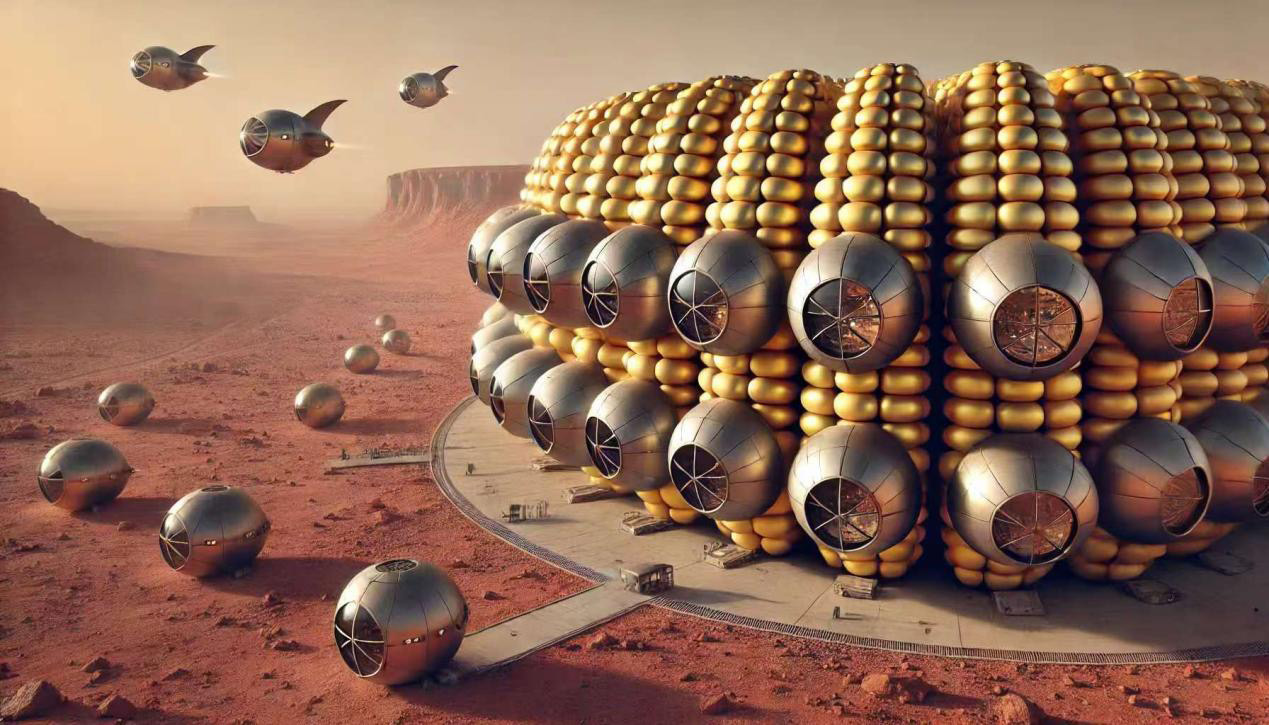
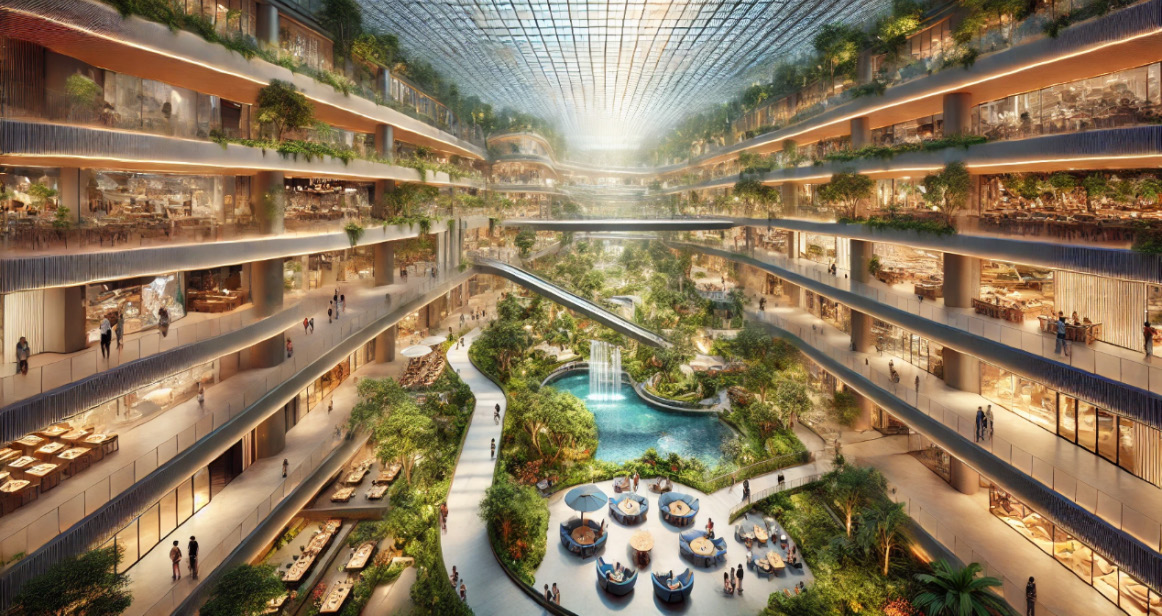
The design of Mars residential areas must address extreme environmental conditions, including frigid temperatures, intense radiation, and frequent dust storms. These challenges require residential areas to meet extremely high standards in terms of safety, functionality, and convenience. Below are three design schemes worth exploring in depth, each representing different development directions in terms of technology, innovation, and adaptability. Balcony Berths and Vertical Communities with Aircraft This scheme emphasizes personalized convenient travel and vertical integration of building functions. Each residential building's balcony is designed as a berthing interface for spherical aircraft, allowing residents to board private aircraft directly from their balconies without walking to the ground. This design fully considers the limitations of traditional ground transportation methods under Mars' harsh surface environment. The use of aircraft not only avoids the direct impact of dust storms and radiation but also shortens travel time and improves transportation efficiency. Furthermore, this design achieves the integration of residences and transportation through modular interfaces for aircraft, greatly enhancing the modernity and convenience of residential areas. In the future, aircraft could be equipped with intelligent navigation systems, allowing residents to simply input their destination, and the aircraft would automatically plan the safest and quickest route. Urban Life in Super-Large Enclosures Another scheme involves constructing a super-large enclosure that houses numerous buildings and infrastructure. This enclosure will simulate Earth's habitable environment, including suitable temperatures, oxygen concentrations, and humidity, creating a fully functional micro-city. The enclosure can be organized into residential, commercial, entertainment, and green areas, forming a comprehensive Mars community. Through highly integrated life support systems, residents inside the enclosure can be free from the direct impact of Mars' external environment and move freely within the enclosed space. Additionally, the top of the enclosure can be designed as a transparent structure to introduce natural light while being equipped with radiation shielding layers to protect residents' health. This scheme not only reduces the need for decentralized management of individual buildings but also makes large-scale population安置 possible. Network Layout of Enclosed Buildings and Interconnected Corridors This scheme involves constructing enclosed buildings separately, connected by underground tunnels or transparent glass corridors, forming a networked residential system. This design focuses on combining dispersion and concentration, with each building serving as an independent enclosed unit that can more flexibly respond to emergencies such as external radiation leaks or energy failures. The underground tunnels and corridors not only provide residents with a safe indoor passage environment but can also enhance the user experience through temperature control and lighting optimization. Furthermore, the use of transparent tunnels in the third section can strengthen the visual connection between Mars residents and the external environment, alleviate the psychological stress that may come from enclosed living, and provide more possibilities for the aesthetic appeal of urban layout.
2. Public Shopping, Entertainment, and Leisure Systems
Shopping, entertainment, and leisure facilities will be primarily located in large buildings, similar to current large complexes, but with more enclosed outdoor spaces featuring artificial lakes, plants, and sunlight brought into the buildings through glass, addressing the environmental issues of no lakes or vegetation on Mars. Some major cultural and entertainment facilities Music halls and theaters will be important components of the city center, providing residents with ample space for cultural activities. The music hall will not only be used for traditional concerts but will also become a venue for various cultural activities such as stage plays, art exhibitions, public lectures, and international cultural exchanges. These spaces will combine modern design with artistic atmosphere, utilizing advanced acoustic technology and virtual reality technology to allow Mars residents not only to hear music but also to experience the unparalleled artistic atmosphere of Earth. The gymnasium will be designed as a multi-functional sports center adapted to Mars' unique low-gravity environment. For example, in addition to traditional sports like basketball and volleyball, new low-gravity sports such as "floating football" and "zero-gravity basketball" will be developed. Additionally, the gymnasium will become an important place for urban residents to interact, socialize, and maintain a healthy lifestyle, providing comprehensive services from fitness centers to competitive sports. Amusement parks will become important destinations for leisure and entertainment for Mars city residents. Unlike on Earth, Mars amusement parks will not rely solely on traditional amusement facilities but will incorporate augmented reality and virtual reality technologies, allowing residents to experience various natural landscapes and amusement projects from Earth. Furthermore, Mars amusement parks will also serve as venues for family gatherings, educational expansion, and multicultural exchange, offering a variety of educational and entertaining activities that stimulate residents' creativity and social skills.