Chapter 34: Establishing Large Cities
1. Urban Planning—Transformation from Infrastructure to Comprehensive Functions
Large cities on Mars are not merely a continuation of base construction but represent a profound transformation from a survival environment to a comprehensive space for human activities. This transformation requires urban planning to transcend basic survival functions and begin focusing on the comprehensive development of social, cultural, and economic activities. Building upon the first-generation bases on Mars, the goal of urban planning is to ensure that not only physiological needs are met, but also an environment that provides social identity, cultural integration, and economic prosperity. Multi-level regional division is key to Mars urban planning. Unlike bases, urban planning needs to consider the organic integration of living, working, and recreational activities. Mars cities will be divided into multiple functional zones, each with clear functions and purposes. For example, residential areas will not only meet basic housing needs but also incorporate spaces for social and cultural activities; commercial districts will not only promote trade but also become gathering places for technological innovation, attracting multinational corporations and research institutions; industrial areas will extend from purely production functions to more intelligent and automated manufacturing centers, promoting the development of high-end industrial chains. Additionally, agricultural areas will not only meet self-sufficiency needs but also attempt various combinations of new ecological agriculture and urban vertical farming, creating a diverse food supply system. Transportation planning in Mars cities will no longer be limited to simple logistics. As cities expand, transportation systems will gradually establish a "smart transportation network" encompassing ground transportation, underground tunnels, and aircraft traffic at multiple levels. This transportation system will utilize automation, artificial intelligence, and electromagnetic propulsion technologies to ensure seamless connection between all city areas and address the increasing travel demands during urban expansion.
2. Urban Infrastructure Construction—Building Self-Sufficient Circular Systems
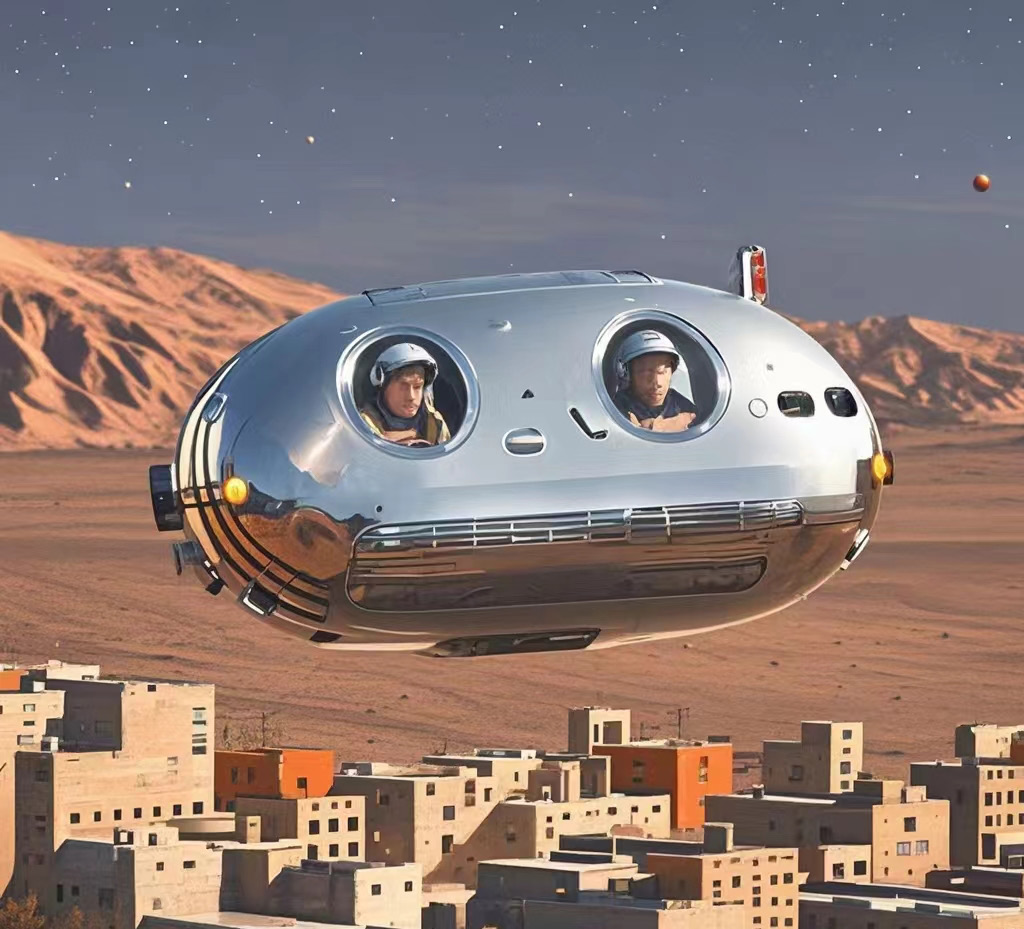
Compared to bases, Mars city infrastructure construction will focus on sustainability, automation, and high integration. Infrastructure for large Mars cities must not only support daily living needs but also provide a foundation for long-term urban expansion and the realization of complex functions. The energy network will transcend the traditional combination of solar and nuclear energy, further developing into a smart grid integrated with multiple energy sources. In addition to traditional solar and nuclear energy, Mars cities will begin exploring new energy utilization methods such as geothermal and wind energy, striving for maximum resource utilization. Especially during the initial phase of urban construction, energy distribution will be the core of city operations, with intelligent energy management systems capable of dynamically allocating electricity and heat to respond to extreme variations in energy supply in the Martian environment. Water cycle systems in Mars cities will evolve from simple water recycling systems into closed-loop water cycle ecosystems. Through advanced water treatment and filtration technologies, Mars cities will achieve efficient water use and zero waste. The city's water cycle must not only meet daily water needs but also support the stable operation of agriculture, industry, and ecosystems. To ensure water sustainability, the city will develop multiple water resource storage methods, including groundwater extraction, wetland plant filtration, and atmospheric water capture technologies. The transportation system is equally crucial in Mars city construction. Due to Mars' surface conditions being different from Earth, vehicle design must consider low-gravity environments, extreme temperature differences, dust storms, and other factors. Underground tunnel systems will become the core skeleton of urban transportation, which can not only avoid the effects of extreme surface climate but also improve transportation efficiency. Ground transportation will mainly use electric drive, and all vehicles will be designed to meet the special needs of the Martian environment, such as stability in low gravity and sealing suitable for Martian dust. Open low-altitude transportation system Given Mars' thin atmosphere, the city will open airspace below 30 meters for plasma-driven aircraft. This transportation system will not rely on traditional roads but will use aircraft for point-to-point transport at low altitudes. It will completely change the operational model of urban transportation, with aircraft moving quickly between different locations, breaking the time and space limitations of traditional transportation methods. Whether for material transport, personnel travel, or emergency rescue, aircraft can transport in the most direct and fastest way within or between cities. Since it doesn't rely on road construction and maintenance, the low-altitude transportation system will greatly reduce infrastructure construction costs, reduce occupation of Mars surface resources, and provide greater flexibility for Mars city expansion. Additionally, the low-altitude transportation system will significantly reduce ground traffic congestion and pollution, improving the city's quality of life. The plasma propulsion system of aircraft is relatively environmentally friendly with no exhaust emissions, reducing negative impacts on the Martian environment. With technological development, transportation efficiency can be further optimized through automated control, intelligent navigation, and other means to ensure safe and efficient low-altitude flight of aircraft. Aircraft design: Plasma-driven aircraft will be designed to be lightweight and efficient, capable of generating sufficient lift in Mars' thin atmosphere. They will use autopilot technology to ensure safe and efficient transportation. Traffic management system: The city will establish an intelligent traffic management system to monitor and manage the flow of low-altitude aircraft, ensuring smooth and safe transportation. Stations and charging facilities: The city will establish aircraft stations and charging facilities at strategic locations for passenger boarding/alighting and aircraft energy replenishment. Furthermore, as urbanization progresses, social service systems will also develop significantly. Multi-functional social service facilities including education, healthcare, culture, and leisure will emerge. Mars cities must not only meet basic human survival needs but also provide residents with emotional support, mental health services, and social interaction platforms. Ecological space design will be more widely applied in cities, especially in public spaces where the "green city" concept will be strongly promoted, using plants, air purification technologies, and open green spaces to create a modern yet ecologically sustainable living environment. Urban infrastructure construction will include establishing energy networks, water cycle systems, transportation systems (including underground tunnels and ground vehicles), and communication and information service networks.
3. Diversified Urban Development
Building cities on Mars need not be limited to a single style. Instead, it should fully leverage the diverse cultural backgrounds and imagination of immigrants to create a diversified urban landscape that combines cultural heritage with future technology. Each city can become a unique showcase where culture and the future blend, radiating its own cultural charm from urban planning to architectural styles. Mars immigrants come from all over Earth, bringing rich cultural traditions and lifestyles. Therefore, the development of Mars cities can draw on the strength of this multiculturalism. For example, some cities can adopt elegant European styles, displaying Western romance and artistic sense through exquisite arcades, plazas, and sculptures; while others can integrate American architectural features such as wide streets, intuitive grid layouts, and skyscrapers, reflecting the modern spirit of openness and efficiency. Meanwhile, modern metropolitan styles can also be widely applied, creating a futuristic living space for residents through minimalist design, highly intelligent facilities, and environmental concepts. The cultural characteristics of Mars cities are not only reflected in architectural styles but can also be highlighted in the overall urban planning. For instance, Mars cities with Asian cultural focus might design with gardens as the core concept, integrating natural elements into the urban environment to create habitats full of Eastern artistic conception. In contrast, Mars cities with African cultural backgrounds might emphasize rich colors and diverse architectural forms, reflecting vitality and innovative spirit. The implantation of this cultural gene will make each city a continuation of immigrant culture while promoting the integration and development of the Mars Federation. Under the guidance of diversified development concepts, every city on Mars will become a symphony of culture, technology, and future vision. Cities of different styles not only satisfy immigrants' sense of belonging but also attract more cultural exchange and innovative thinking. This diversified urban construction method not only injects rich vitality into Mars' future development but also demonstrates the possibility of cultural coexistence and cooperation to nations on Earth.
4. Indoor Environment
In Mars' extreme environment, indoor architectural design becomes crucial for ensuring residents' life safety and living comfort. Due to Mars' thin atmosphere, extremely low temperatures, and lack of stable atmospheric pressure, the control and regulation of the living environment are particularly important. To this end, buildings on Mars will use advanced technologies to ensure that the indoor environment not only meets basic survival needs but also provides a comfortable living experience, enhancing residents' quality of life. First, temperature control systems play a vital role in Mars building design. Due to the extreme cold on Mars' surface, with temperature differences of tens of degrees between day and night, indoor temperatures must be maintained within a suitable range. Mars buildings will use efficient underfloor heating systems, heating the building structure through underground pipes to conduct ground heat into the interior, ensuring indoor temperatures remain around 26 degrees year-round. This temperature setting not only meets human comfort needs but also helps maintain the normal operation of other systems, such as preventing water pipes from freezing. In Mars' extreme climate conditions, air quality control is equally crucial. Mars' native atmosphere is mainly composed of carbon dioxide with almost no oxygen, so buildings must be equipped with advanced oxygen generators. Oxygen generators produce oxygen through electrolysis of water or other methods, ensuring indoor oxygen levels are close to Earth's standards, allowing residents to live in a worry-free environment. At the same time, air purifiers will strictly filter and purify indoor air, removing any harmful substances or pollutants to keep indoor air fresh and clean. To further enhance building safety, pressure control systems will also be widely used in Mars buildings. Due to Mars' atmospheric pressure being much lower than Earth's, the internal pressure of buildings needs to be maintained within a safe range to prevent structural damage or effects on residents from pressure changes. Each room will be equipped with pressure detectors and temperature sensors to monitor indoor pressure and temperature changes in real time. In case of pressure abnormalities or temperature fluctuations, the system will automatically adjust to ensure the indoor environment remains safe and comfortable. In addition to basic air quality and temperature control facilities, interior design will also consider spatial comfort and functionality. Smart lighting, automated control systems, and more will be installed indoors to provide personalized comfort experiences. These systems can not only automatically adjust according to external environmental changes but also be remotely controlled through smart devices, providing residents with convenient living conditions. In summary, indoor environment control systems in Mars buildings will address multiple aspects to ensure the stability and comfort of key factors such as indoor temperature, air quality, and atmospheric pressure, providing residents with a safe, healthy, and livable living space.
5. Resident Activities
Due to Mars' extremely harsh climate with severe temperature fluctuations—daytime temperatures can reach around 20°C, but nighttime temperatures can drop to -60°C or lower—combined with very low atmospheric pressure (about 1/100 of Earth's), outdoor activities are very difficult and require wearing spacesuits. Therefore, residents' activities on Mars mainly occur in indoor spaces. Access to different indoor building spaces will primarily be through internal tunnels (similar to Earth's subways but with better sealing) and unmanned aircraft. However, in the future, with technological development, nasal oxygen generators, nano-skin spacesuits, and other innovations may allow humans to directly on the Martian surface.