Chapter 28: Industrial Takeoff and National Industrial Policy
The industrialization of Mars began with the strong promotion by the Federation, combined with technological innovation,致力于 rapidly establishing an independent industrial system. The Federation's industrial policy focuses on efficiently developing industrial capabilities, creating complete industrial chains, and forming Mars' unique industrial advantages.
1. Overtaking Strategy and Industrial Foundation
The industrial development of the Mars Federation will rely on its abundant mineral resources and rapidly establish a solid industrial foundation by implementing the "Overtaking Strategy." The core of this strategy is to rapidly elevate Mars' industrial level by prioritizing the development of strategic resources, especially key materials such as steel, rare metals, and new energy materials, paving the way for subsequent high-end manufacturing and technological innovation. Due to Mars' vast and underdeveloped natural resource reserves, the Mars Federation has the opportunity to skip some industrial bottlenecks that already exist on Earth through rapid and decisive actions, directly moving toward more efficient and intelligent industrial production models. The primary goal of the "Overtaking Strategy" is to lay a solid foundation for industry by prioritizing the development of strategic resources. Mars' mineral resources, including iron ore, rare earth elements, cobalt, lithium, etc., are indispensable basic materials in modern industry. Especially steel, aluminum, and rare metals have wide applications in manufacturing, construction, aerospace engineering, and other fields. Through advanced mineral extraction technologies, the Mars Federation will accelerate the extraction and processing of these resources, ensuring a stable supply of basic metals such as steel. However, relying solely on resource extraction cannot meet the needs of rapid industrialization, therefore the "Overtaking Strategy" not only depends on the advantages of resources themselves but will also focus on improving resource utilization efficiency through technological innovation. For example, by introducing cutting-edge technologies such as automated mining, robotics, precision manufacturing, and digital management, the Mars Federation can significantly improve the efficiency and accuracy of resource extraction. Using artificial intelligence to optimize resource utilization and allocation will also provide necessary technical support for Mars' industrial development. In addition, the Mars Federation will formulate a series of favorable policies to encourage rapid resource extraction, technological innovation, and industrial upgrading. These policies will include tax incentives, R&D subsidies, talent introduction, corporate support, and other measures to attract top global research institutions and enterprises to participate in Mars' industrialization construction. The Mars Federation will also strengthen infrastructure construction, such as transportation, energy supply, communication networks, etc., to ensure resources can flow efficiently and industrial production can proceed efficiently. Through this series of policies and measures, the Mars Federation will be able to quickly bridge the gap with advanced Earth industrialization levels and achieve overtaking in a relatively short period.
2. Industrial Core—Humanoid Robot Full-Drive
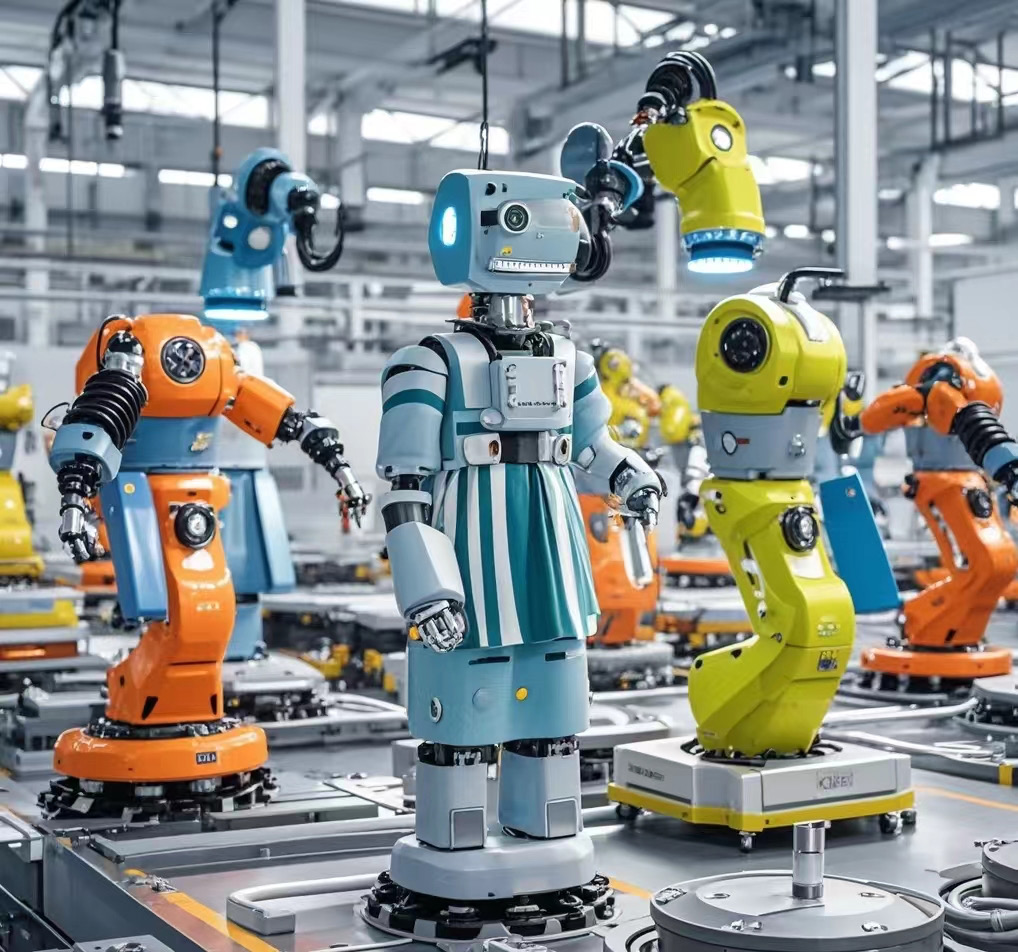
The industrial system of the Mars Federation will be centered on "humanoid robot full-drive," with all industrial activities revolving around the production of humanoid robots, which in turn will be responsible for all other production and manufacturing tasks, even including the production of robots themselves, forming a highly automated, flexible, and self-enhancing industrial system. This system can not only meet production demands under Mars' extreme environment but also provide sustainable impetus for the Mars Federation's industrialization, technological advancement, and social development. Humanoid robots will not only be tools for production but also the core force driving industrial development. They not only complete production tasks but are also responsible for manufacturing other robots, enhancing industrial capabilities through self-expansion. In the Mars Federation's industrial system, humanoid robots will undertake all aspects from resource extraction to product manufacturing. Different from traditional production models, this robot-driven production method will ensure production efficiency and quality through highly integrated automation systems. Through precise control and operation, humanoid robots will perform various complex tasks, maximizing the utilization of Mars' resources. For example, in the mineral extraction process, robots can efficiently extract minerals through advanced detection and excavation technologies, reducing manual intervention and thus improving operational safety and efficiency. In the manufacturing process, these robots will have high adaptability and intelligence, able to autonomously adjust work modes and optimize production processes during production. Robots will work collaboratively through data sharing and real-time feedback, forming a highly integrated production network. In this way, Mars' industry can not only operate stably in complex environments but also respond to changing market demands and production challenges. Additionally, robots can work collaboratively through specialized robot production lines to perform fine processing, assembly, and testing of components, self-replicating to produce robots. This production process does not completely rely on manual intervention but requires relatively precise control systems to ensure accurate execution of each link. For example, when producing new robots, one robot can be responsible for manufacturing components, another for quality inspection and assembly, and throughout the production process, each robot collaborates with others through intelligent sensors and data sharing, ensuring the efficiency and smoothness of the production chain. To better achieve robot replication production, a highly modular design concept will be adopted, with each humanoid robot consisting of several standardized modules, including power units, sensing systems, robotic arms, control systems, and other key components. The standardization of these modules allows robots to be quickly assembled and replaced during production, improving production efficiency. For example, in robot manufacturing plants, specialized modular assembly lines can handle the manufacturing and assembly of different components, reducing time waste and resource consumption. In Mars' special environment, resource limitations mean that every production must achieve maximum benefit with minimal resource consumption. Humanoid robots can not only automatically complete a large number of repetitive tasks but also improve resource utilization through precise resource management and optimization. For example, robots can perform precise directional mining when extracting minerals, avoiding resource waste, while adjusting work strategies as needed to maximize resource recovery rates. Through this series of efficient production processes, the Mars Federation can achieve rapid expansion of production capacity to meet growing industrial demands. Since robots can autonomously complete production tasks without extensive human intervention, Mars will be able to conduct resource development and product manufacturing at extremely low costs, thereby promoting the overall rapid development of society.
3. Construction of Industrial Parks
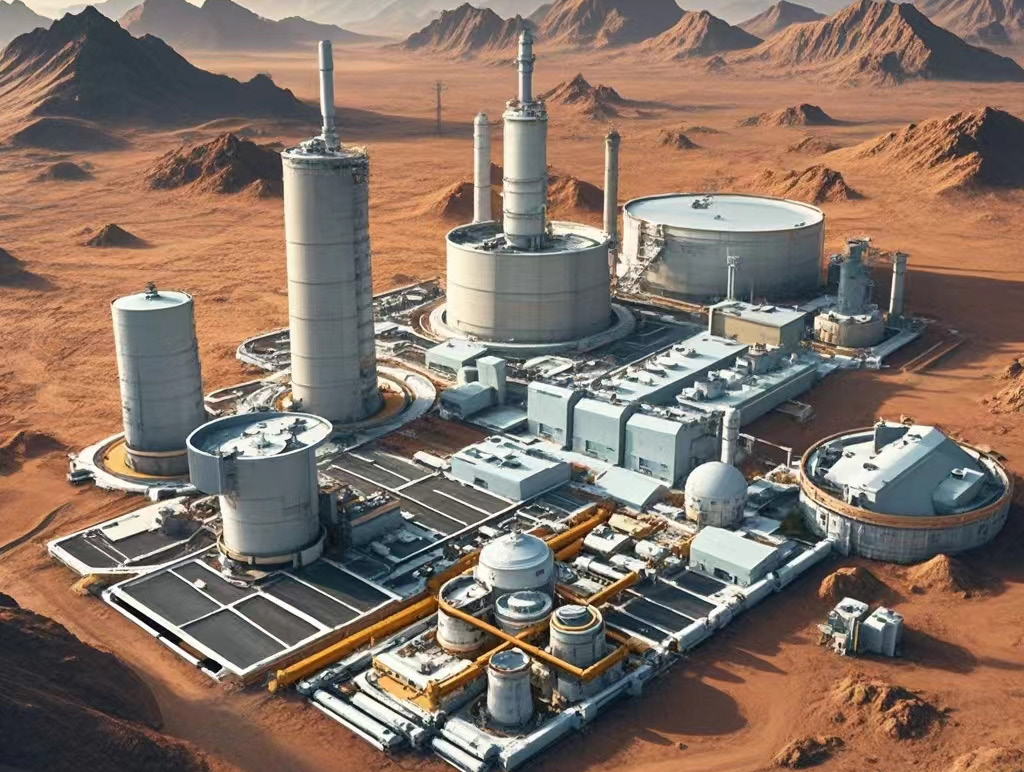
To concentrate resources and technology, the Federation plans to build a large number of ultra-large-scale industrial parks. These parks will bring together various enterprises, research institutions, and innovation teams to form a collaborative development ecosystem. Specialized laboratories and production facilities will be established within the parks to encourage cooperation and resource sharing among enterprises, maximizing production efficiency and technological innovation capabilities. Industrial parks will become the core carriers of Mars' industrial development, providing a favorable development environment for various industries.