第二十八章:工业起步与国家工业政策
火星的工业化起步于联邦的强力推动,结合科技创新,致力于迅速建立自主的工业体系。联邦的工业政策重在高效发展工业能力,打造完整的产业链,形成火星独有的工业优势。
1. 赶超战略与工业基础
火星联邦的工业发展将依托其丰富的矿产资源,并通过实施“赶超战略”快速建立坚实的工业基础。这一战略的核心是通过优先开发战略资源,特别是钢铁、稀有金属和新能源材料等关键物资,迅速提升火星工业水平,为后续的高端制造业和科技创新铺平道路。由于火星的自然资源储量庞大且尚未充分开发,火星联邦有机会通过快速而有力的行动,跳过一些地球上已存在的工业化瓶颈,直接迈向更高效、更智能的工业生产模式。“赶超战略”首要目标是通过优先开发战略资源来为工业打下坚实基础。火星的矿产资源,包括铁矿、稀土元素、钴、锂等,是现代工业中不可或缺的基础性材料。尤其是钢铁、铝和稀有金属,在制造业、建筑业、航天工程等领域都有着广泛应用。通过先进的矿产开采技术,火星联邦将加速这些资源的提取和加工,确保钢铁等基础金属的稳定供应。然而,单纯依赖资源开采并不能满足快速工业化的需求,因此“赶超战略”不仅仅依赖资源本身的优势,还将重点通过科技创新来提高资源利用效率。例如,通过引入自动化采矿、机器人技术、精密制造和数字化管理等前沿技术,火星联邦可以大幅提升资源开采的效率和精准度。使用人工智能来优化资源利用与分配,也将为火星的工业发展提供必要的技术支持。此外,火星联邦将制定一系列有利的政策,以鼓励资源的快速开采、科技创新和产业升级。这些政策将包括税收优惠、研发补贴、人才引进、企业支持等措施,以吸引全球顶尖的科研机构和企业参与火星的工业化建设。火星联邦还将加强基础设施建设,如交通运输、能源供应、通信网络等,确保资源能够高效流通,工业生产能够高效进行。通过这一系列政策和措施,火星联邦将能够快速弥补与地球先进工业化水平之间的差距,在较短时间内实现赶超。
2. 工业核心——人形机器人全驱动
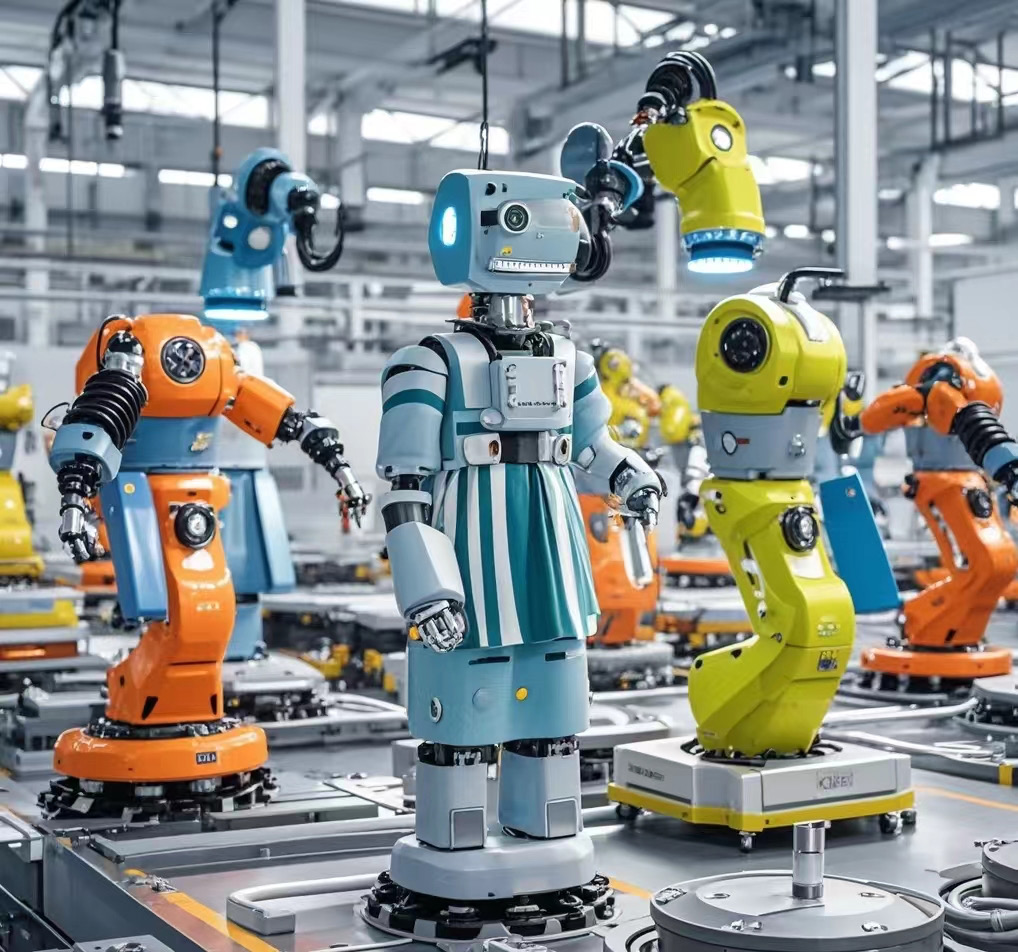
火星联邦的工业体系将以“人形机器人全驱动”为核心,所有工业均围绕人形机器人的生产开展,人形机器人再负责其他所有生产制造任务,甚至负责生产机器人,形成一个高度自动化、灵活且自我增强的工业体系。这一体系不仅能应对火星极端环境下的生产需求,还能为火星联邦的工业化、科技进步及社会发展提供持久动力。人形机器人将不仅是生产的工具,更是推动产业发展的核心力量,它们不仅完成生产任务,还负责制造其他机器人,通过自我扩展提升工业能力。在火星联邦的工业体系中,人形机器人将承担从资源开采到产品制造的所有环节。与传统生产模式不同,这种机器人驱动的生产方式将通过高度集成的自动化系统,确保生产效率和质量。人形机器人将通过精确地控制和操作,执行各种复杂的任务,最大化利用火星的资源。例如,在矿产开采过程中,机器人能够通过先进的探测与挖掘技术高效提取矿物,减少人工干预,从而提升作业安全性和效率。在制造过程中,这些机器人将具备高度的适应能力和智能,能够在生产过程中自主调整工作模式、优化生产流程。机器人之间通过共享数据和实时反馈,协同工作,形成一个高度集成的生产网络。这样,火星的工业不仅能够在复杂环境中稳定运行,还能应对不断变化的市场需求和生产挑战。此外,机器人可以通过协同合作的方式,通过专门的机器人制造生产线,将零部件进第三部分:发展行精细加工、组装和测试,自我复制生产机器人。这一生产过程并不完全依赖人工干预,但需要相对精密的控制系统来确保每个环节的精准执行。例如,在生产新的机器人时,一台机器人可以负责零部件的制造,另一台机器人则负责进行质量检查和组装,而在整个生产过程中,每台机器人都通过智能传感器和数据共享与其他机器人进行协作,确保生产链条的高效流畅。为了更好地实现机器人复制生产,将采用高度模块化的设计理念,每一台人形机器人都由若干标准化模块组成,包括动力单元、感应系统、机械手臂、控制系统等关键部分。这些模块的标准化使得机器人能够在生产过程中快速组合和替换,提升生产效率。例如,机器人制造厂中,专门的模块化组装线能够处理不同部件的制造和组装任务,减少时间浪费和资源消耗。在火星的特殊环境下,资源的限制意味着每一项生产都必须在最小的资源消耗下实现最大效益。人形机器人不仅能够自动化完成大量重复性工作,还能够通过精确的资源管理和优化,提高资源利用率。例如,机器人可以在开采矿产时进行精确的定向挖掘,避免资源浪费,同时根据需要调整工作策略,最大限度提高资源的回收率。通过这一系列高效的生产环节,火星联邦能够实现生产能力的快速扩展,满足日益增长的工业需求。由于机器人能够在无须大量人工介入的情况下自主完成生产任务,火星将能够以极低的成本进行资源开发和产品制造,从而推动社会整体的快速发展。
3. 工业园区的建设
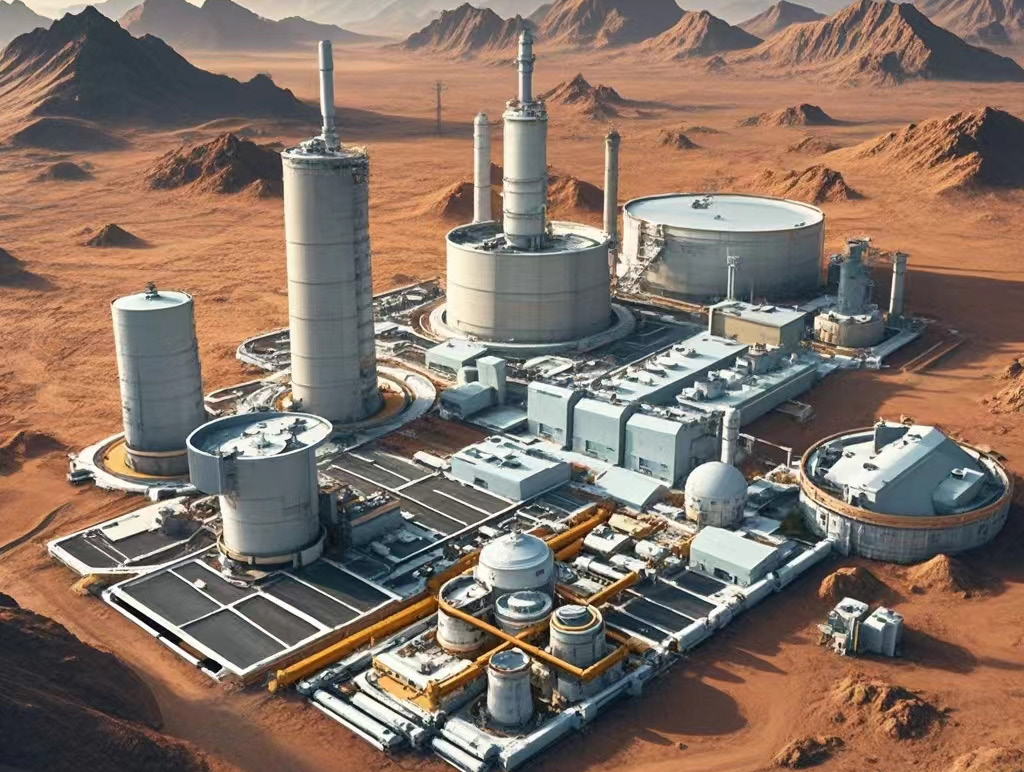
为了集中资源与技术,联邦计划建设大批超大规模工业园区。这些园区将汇集各类企业、研发机构和创新团队,形成一个协同发展的生态系统。园区内将设立专门的实验室和生产设施,鼓励企业间的合作与资源共享,最大化地提升生产效率和技术创新能力。工业园区将成为火星工业发展的核心载体,为各项产业提供良好的发展环境。
Chapter 28: Industrial Takeoff and National Industrial Policy
The industrialization of Mars began with the strong promotion by the Federation, combined with technological innovation,致力于 rapidly establishing an independent industrial system. The Federation's industrial policy focuses on efficiently developing industrial capabilities, creating complete industrial chains, and forming Mars' unique industrial advantages.
1. Overtaking Strategy and Industrial Foundation
The industrial development of the Mars Federation will rely on its abundant mineral resources and rapidly establish a solid industrial foundation by implementing the "Overtaking Strategy." The core of this strategy is to rapidly elevate Mars' industrial level by prioritizing the development of strategic resources, especially key materials such as steel, rare metals, and new energy materials, paving the way for subsequent high-end manufacturing and technological innovation. Due to Mars' vast and underdeveloped natural resource reserves, the Mars Federation has the opportunity to skip some industrial bottlenecks that already exist on Earth through rapid and decisive actions, directly moving toward more efficient and intelligent industrial production models. The primary goal of the "Overtaking Strategy" is to lay a solid foundation for industry by prioritizing the development of strategic resources. Mars' mineral resources, including iron ore, rare earth elements, cobalt, lithium, etc., are indispensable basic materials in modern industry. Especially steel, aluminum, and rare metals have wide applications in manufacturing, construction, aerospace engineering, and other fields. Through advanced mineral extraction technologies, the Mars Federation will accelerate the extraction and processing of these resources, ensuring a stable supply of basic metals such as steel. However, relying solely on resource extraction cannot meet the needs of rapid industrialization, therefore the "Overtaking Strategy" not only depends on the advantages of resources themselves but will also focus on improving resource utilization efficiency through technological innovation. For example, by introducing cutting-edge technologies such as automated mining, robotics, precision manufacturing, and digital management, the Mars Federation can significantly improve the efficiency and accuracy of resource extraction. Using artificial intelligence to optimize resource utilization and allocation will also provide necessary technical support for Mars' industrial development. In addition, the Mars Federation will formulate a series of favorable policies to encourage rapid resource extraction, technological innovation, and industrial upgrading. These policies will include tax incentives, R&D subsidies, talent introduction, corporate support, and other measures to attract top global research institutions and enterprises to participate in Mars' industrialization construction. The Mars Federation will also strengthen infrastructure construction, such as transportation, energy supply, communication networks, etc., to ensure resources can flow efficiently and industrial production can proceed efficiently. Through this series of policies and measures, the Mars Federation will be able to quickly bridge the gap with advanced Earth industrialization levels and achieve overtaking in a relatively short period.
2. Industrial Core—Humanoid Robot Full-Drive
The industrial system of the Mars Federation will be centered on "humanoid robot full-drive," with all industrial activities revolving around the production of humanoid robots, which in turn will be responsible for all other production and manufacturing tasks, even including the production of robots themselves, forming a highly automated, flexible, and self-enhancing industrial system. This system can not only meet production demands under Mars' extreme environment but also provide sustainable impetus for the Mars Federation's industrialization, technological advancement, and social development. Humanoid robots will not only be tools for production but also the core force driving industrial development. They not only complete production tasks but are also responsible for manufacturing other robots, enhancing industrial capabilities through self-expansion. In the Mars Federation's industrial system, humanoid robots will undertake all aspects from resource extraction to product manufacturing. Different from traditional production models, this robot-driven production method will ensure production efficiency and quality through highly integrated automation systems. Through precise control and operation, humanoid robots will perform various complex tasks, maximizing the utilization of Mars' resources. For example, in the mineral extraction process, robots can efficiently extract minerals through advanced detection and excavation technologies, reducing manual intervention and thus improving operational safety and efficiency. In the manufacturing process, these robots will have high adaptability and intelligence, able to autonomously adjust work modes and optimize production processes during production. Robots will work collaboratively through data sharing and real-time feedback, forming a highly integrated production network. In this way, Mars' industry can not only operate stably in complex environments but also respond to changing market demands and production challenges. Additionally, robots can work collaboratively through specialized robot production lines to perform fine processing, assembly, and testing of components, self-replicating to produce robots. This production process does not completely rely on manual intervention but requires relatively precise control systems to ensure accurate execution of each link. For example, when producing new robots, one robot can be responsible for manufacturing components, another for quality inspection and assembly, and throughout the production process, each robot collaborates with others through intelligent sensors and data sharing, ensuring the efficiency and smoothness of the production chain. To better achieve robot replication production, a highly modular design concept will be adopted, with each humanoid robot consisting of several standardized modules, including power units, sensing systems, robotic arms, control systems, and other key components. The standardization of these modules allows robots to be quickly assembled and replaced during production, improving production efficiency. For example, in robot manufacturing plants, specialized modular assembly lines can handle the manufacturing and assembly of different components, reducing time waste and resource consumption. In Mars' special environment, resource limitations mean that every production must achieve maximum benefit with minimal resource consumption. Humanoid robots can not only automatically complete a large number of repetitive tasks but also improve resource utilization through precise resource management and optimization. For example, robots can perform precise directional mining when extracting minerals, avoiding resource waste, while adjusting work strategies as needed to maximize resource recovery rates. Through this series of efficient production processes, the Mars Federation can achieve rapid expansion of production capacity to meet growing industrial demands. Since robots can autonomously complete production tasks without extensive human intervention, Mars will be able to conduct resource development and product manufacturing at extremely low costs, thereby promoting the overall rapid development of society.
3. Construction of Industrial Parks
To concentrate resources and technology, the Federation plans to build a large number of ultra-large-scale industrial parks. These parks will bring together various enterprises, research institutions, and innovation teams to form a collaborative development ecosystem. Specialized laboratories and production facilities will be established within the parks to encourage cooperation and resource sharing among enterprises, maximizing production efficiency and technological innovation capabilities. Industrial parks will become the core carriers of Mars' industrial development, providing a favorable development environment for various industries.