第三十四章:建立大型城市
1. 城市规划——从基础设施到全面功能的转型
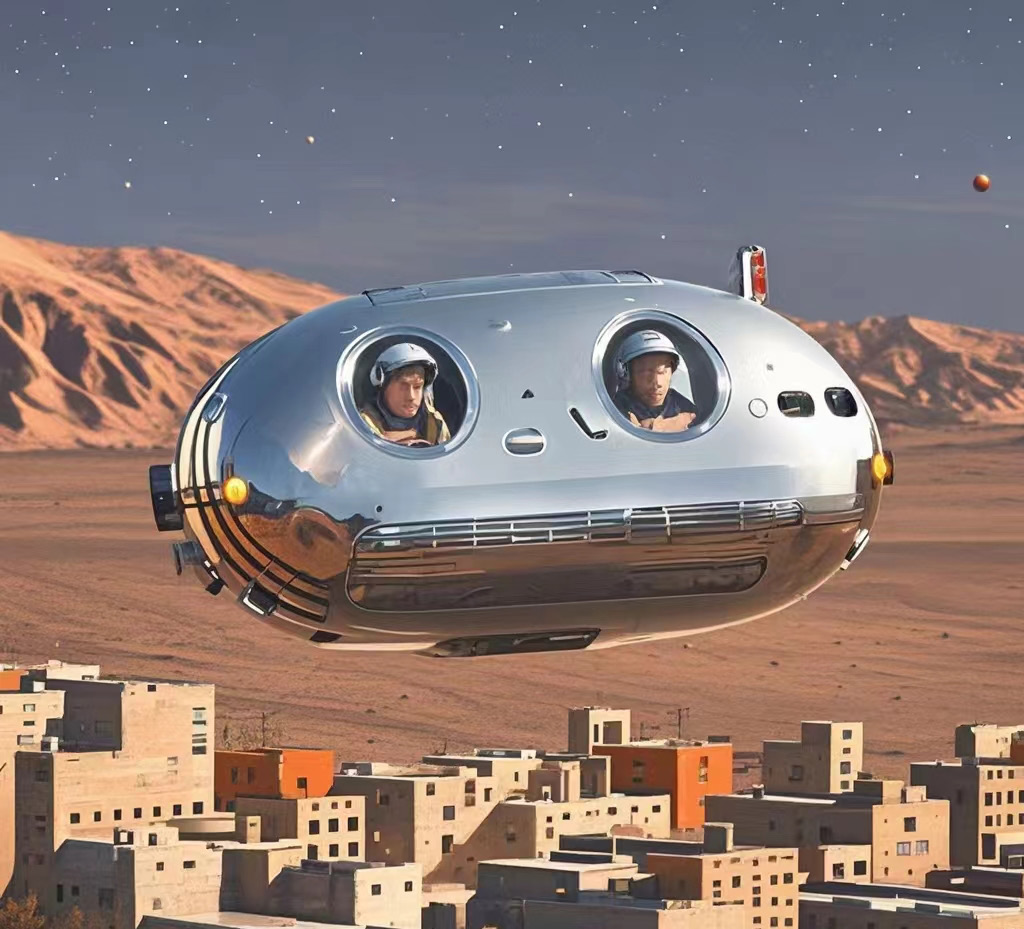
火星上的大型城市并不仅仅是基地建设的延续,而是一个从生存环境到综合人类活动空间的深度转型。这种转型要求城市规划超越基础的生存功能,开始注重社会、文化、经济活动的全面发展。在火星第一代基地的基础上,城市规划的目标是确保不仅满足生理需求,还能提供社会认同、文化融合和经济繁荣的环境。多层次的区域划分是火星城市规划的关键。与基地不同,城市规划需要考虑到生活、工作和娱乐的有机结合。火星城市将划分为多个功能区,每个区域都具有明确的功能和用途。例如,居住区不仅仅满足基础居住需求,还将融入社交、文化活动的空间;商业区不仅促进贸易往来,还将成为科技创新的集聚地,吸引跨国公司和研究机构的设立;工业区则要从单纯的生产功能延伸至更具智慧化、自动化的制造中心,推动高端产业链发展。此外,农业区不仅要满足自给自足的需求,还将尝试各种新的生态农业和城市垂直农业的结合,创造多样化的食物供应体系。火星城市的交通规划也不再局限于简单的物流运输。随着城市规模的扩大,交通系统将逐步建立起“智能交通网络”,涵盖地面交通、地下隧道、飞行器交通等多个层面。这一交通系统将利用自动化、人工智能和电磁推进技术,确保无缝连接城市的各个区域,并解决城市扩展过程中日益增加的出行需求。城市基础设施建设
2. 城市基础设施建设——构建自给自足的循环系统
与基地相比,火星城市的基础设施建设将着重于可持续性、自动化和高度集成。火星大型城市的基础设施不仅要支持日常生活的需求,还要为城市的长期扩展和复杂功能的实现提供保障。能源网络将超越传统的太阳能和核能的结合,进一步发展为一个集成多种能源来源的智能电网。除了传统的太阳能和核能,火星城市将开始探索地热能、风能等新的能源利用方式,力求做到资源的最大化利用。尤其在城市建设初期,能源分配将是整个城市运营的核心,智能化的能源管理系统能够动态调配电力和热能,以应对火星环境下能源供应的极端变化。水循环系统在火星城市中将从单纯的水资源回收系统,发展为一个闭环水循环生态系统。通过先进的水处理和过滤技术,火星城市将能够实现水资源的高效利用和零浪费。城市的水循环不仅要满足日常生活用水,还要支持农业、工业和生态系统的稳定运作。为了确保水源的持续性,城市内将开发多种水资源储备方式,包括地下水提取、湿地植物过滤和大气水捕捉技术。交通系统在火星城市建设中同样至关重要。由于火星的表面条件不同于地球,交通工具的设计需要考虑低重力环境、极端温差、沙尘暴等因素。地下隧道系统将成为城市交通的核心骨架,这不仅能避开地表极端气候的影响,还能提高运输效率。地面交通工具将以电动驱动为主,考虑到火星表面多崎岖不平,所有交通工具都将设计为适应火星环境的特殊需求,比如低重力下的稳定性、适应火星沙尘的密封性等。开放低空交通系统鉴于火星大气稀薄的特性,城市将开放30米以下的低空供等离子驱动飞行器使用。这种交通系统将不依赖于传统的道路,而是利用飞行器在低空进行点对点的运输。它将彻底改变城市交通的运作模式,飞行器将在不同地点之间快速移动,打破传统交通方式的时空限制。无论是物资运输、人员出行还是紧急救援,飞行器都可以在城市内部或城市之间以最直接、最快速的方式进行运输。由于不依赖于道路建设和维护,低空交通系统将大大降低基础设施建设的成本,减少对火星表面资源的占用,为火星城市的扩展提供更大的灵活性。此外,低空交通系统还将大大减少地面交通的拥堵和污染,提升城市的生活质量。飞第三部分:发展行器的等离子驱动系统相对环保,无废气排放,减少了对火星环境的负面影响。随着技术的发展,未来还可以通过自动化控制、智能导航等手段进一步优化交通效率,确保飞行器安全、高效地在低空飞行。飞行器设计:等离子驱动飞行器将设计为轻巧、高效,能够在火星稀薄的大气中产生足够的升力。它们将采用自动驾驶技术,确保安全和高效地运输。交通管理系统:城市将建立一个智能交通管理系统,以监控和管理低空飞行器的流量,确保运输的顺畅和安全。停靠站和充电设施:城市将在战略位置建立飞行器停靠站和充电设施,以便于乘客的上下车和飞行器的能量补给。此外,随着城市化进程的推进,社会服务系统也将得到长足的发展。包括教育、医疗、文化、休闲等多功能的社会服务设施将应运而生。火星的城市不仅要满足人类生存的基本需求,还要为居民提供情感支持、心理健康服务和社会交往平台。生态空间设计将在城市中得到更为广泛的应用,尤其在城市的公共空间内,将大力推动“绿色城市”理念,利用植物、空气净化技术和开放式绿地,将城市打造成既具现代化,又符合生态永续的居住环境。城市基础设施的建设将包括建立能源网络、水循环系统、交通系统(包括地下隧道和地面运输工具),以及通信和信息服务网络。
3. 城市多元化发展
在火星上构建城市不必拘泥于单一风格,反而应充分发挥移民多样化的文化背景与想象力,创造兼具文化传承与未来科技的多元化城市格局。每个城市都可以成为一个文化与未来交融的独特展示窗口,从城市规划到建筑风格,无不散发出各自的文化魅力。火星移民来自地球各地,他们带着丰富的文化传统与生活方式。因此,火星城市的发展可以借鉴这一多元文化的力量。例如,某些城市可以采用典雅的欧式风格,以精致的拱廊、广场和雕塑展示西方传统的浪漫与艺术感;而另一些城市则可以融合美式建筑特色,如宽阔的街道、直观的网格布局以及摩天大楼,体现开放与效率的现代精神。同时,现代化都会风格也能被广泛应用,通过极简设计、高度智能化设施与环保理念,为居民打造未来感十足的生活空间。火星城市的文化特色不仅体现在建筑风格上,还可以在城市的整体规划中彰显。例如,以亚洲文化为主的火星城市或许会以园林为核心设计理念,将自然元素融入城市环境,打造出充满东方意蕴的栖息地。与之相比,非洲文化背景的火星城市可能会注重色彩的丰富性与建筑形态的多样性,体现活力与创新精神。这种文化基因的植入,将使每个城市成为移民文化的延续,同时推动火星联邦的融合与发展。在多元化发展理念的指引下,火星上的每一座城市都将成为文化、科技与未来愿景的交响曲。不同风格的城市不仅满足了移民的归属感,还吸引着更多的文化交流与创新思维。这种多元化的城市建设方式,不仅为火星的未来发展注入了丰富的生命力,也为地球上的各国展示了文化共存与合作的可能性。
4. 室内环境
在火星的极端环境下,建筑的室内环境设计成为保障居民生命安全与生活舒适的关键。由于火星表面大气稀薄、气温极低且缺乏稳定的气压,居住环境的控制与调节显得尤为重要。为此,火星上的建筑将通过先进的技术手段,确保室内环境不仅能够满足基本的生存需求,还能提供舒适的居住体验,增强居民的生活质量。首先,温度控制系统在火星建筑的设计中扮演着至关重要的角色。由于火星表面的温度极其寒冷,白天与夜晚的温差可达到数十度,因此室内气温必须始终保持在适宜的范围。火星建筑内部将采用高效的地暖系统,通过地下管道加热建筑结构,将地面的热量传导至室内,从而确保室内温度常年保持在约26度。这一温度设置不仅符合人体舒适的生活需求,同时也有助于维持其他系统的正常运作,比如供水管道的防冻保护等。在气候条件极端的火星,空气质量的控制同样至关重要。火星的原生大气主要由二氧化碳组成,几乎没有氧气,因此建筑内部必须配备先进的制氧机。制氧机通过电解水或其第三部分:发展他方式生产氧气,确保室内空气的氧气含量接近地球水平,从而让居民能够在无忧的环境中生活。同时,空气净化器将对室内空气进行严格过滤与净化,去除任何有害物质或污染物,保持室内空气的新鲜与清洁。为了进一步提高建筑安全性,气压控制系统也将被广泛应用于火星建筑中。由于火星的大气压远低于地球,建筑内部的气压需要保持在安全的范围内,以防止建筑出现结构性损坏或住户受到气压变化的影响。每个房间将安装气压探测器和温度传感器,实时监测室内的气压与温度变化。一旦出现气压异常或温度波动,系统会自动调节,确保室内环境始终保持在安全、舒适的状态。除了基本的空气质量与温控设施,建筑内部的设计还会考虑到空间的舒适性与功能性。室内将设置智能照明、自动化控制系统等,以提供个性化的舒适体验。这些系统不仅能够根据外部环境变化自动调整,还能通过智能设备进行远程操控,为居民提供便利的生活条件。总之,火星建筑内的室内环境控制系统将从多个方面入手,确保室内温度、空气质量和气压等关键因素的稳定和舒适,为居民提供一个安全、健康、宜居的生活空间。
5. 居民活动
因火星上的气候十分恶劣,温度波动剧烈,白天温暖时,温度可达到20°C左右,但夜晚温度会骤降至-60°C甚至更低,加上大气压非常低,大约是地球的1/100,在户外活动非常困难,必须身穿宇航服。因此,火星上居民的活动主要在室内空间。通往不同建筑室内空间,只要采用内部隧道(类似地球上的地铁,但是密封性更好)和无人飞行器。但是,未来,随着技术的发展,将发展出鼻腔制氧机、纳米皮肤宇航服等,人类可能在火星表面直接活动。
Chapter 34: Establishing Large Cities
1. Urban Planning—Transformation from Infrastructure to Comprehensive Functions
Large cities on Mars are not merely a continuation of base construction but represent a profound transformation from a survival environment to a comprehensive space for human activities. This transformation requires urban planning to transcend basic survival functions and begin focusing on the comprehensive development of social, cultural, and economic activities. Building upon the first-generation bases on Mars, the goal of urban planning is to ensure that not only physiological needs are met, but also an environment that provides social identity, cultural integration, and economic prosperity. Multi-level regional division is key to Mars urban planning. Unlike bases, urban planning needs to consider the organic integration of living, working, and recreational activities. Mars cities will be divided into multiple functional zones, each with clear functions and purposes. For example, residential areas will not only meet basic housing needs but also incorporate spaces for social and cultural activities; commercial districts will not only promote trade but also become gathering places for technological innovation, attracting multinational corporations and research institutions; industrial areas will extend from purely production functions to more intelligent and automated manufacturing centers, promoting the development of high-end industrial chains. Additionally, agricultural areas will not only meet self-sufficiency needs but also attempt various combinations of new ecological agriculture and urban vertical farming, creating a diverse food supply system. Transportation planning in Mars cities will no longer be limited to simple logistics. As cities expand, transportation systems will gradually establish a "smart transportation network" encompassing ground transportation, underground tunnels, and aircraft traffic at multiple levels. This transportation system will utilize automation, artificial intelligence, and electromagnetic propulsion technologies to ensure seamless connection between all city areas and address the increasing travel demands during urban expansion.
2. Urban Infrastructure Construction—Building Self-Sufficient Circular Systems
Compared to bases, Mars city infrastructure construction will focus on sustainability, automation, and high integration. Infrastructure for large Mars cities must not only support daily living needs but also provide a foundation for long-term urban expansion and the realization of complex functions. The energy network will transcend the traditional combination of solar and nuclear energy, further developing into a smart grid integrated with multiple energy sources. In addition to traditional solar and nuclear energy, Mars cities will begin exploring new energy utilization methods such as geothermal and wind energy, striving for maximum resource utilization. Especially during the initial phase of urban construction, energy distribution will be the core of city operations, with intelligent energy management systems capable of dynamically allocating electricity and heat to respond to extreme variations in energy supply in the Martian environment. Water cycle systems in Mars cities will evolve from simple water recycling systems into closed-loop water cycle ecosystems. Through advanced water treatment and filtration technologies, Mars cities will achieve efficient water use and zero waste. The city's water cycle must not only meet daily water needs but also support the stable operation of agriculture, industry, and ecosystems. To ensure water sustainability, the city will develop multiple water resource storage methods, including groundwater extraction, wetland plant filtration, and atmospheric water capture technologies. The transportation system is equally crucial in Mars city construction. Due to Mars' surface conditions being different from Earth, vehicle design must consider low-gravity environments, extreme temperature differences, dust storms, and other factors. Underground tunnel systems will become the core skeleton of urban transportation, which can not only avoid the effects of extreme surface climate but also improve transportation efficiency. Ground transportation will mainly use electric drive, and all vehicles will be designed to meet the special needs of the Martian environment, such as stability in low gravity and sealing suitable for Martian dust. Open low-altitude transportation system Given Mars' thin atmosphere, the city will open airspace below 30 meters for plasma-driven aircraft. This transportation system will not rely on traditional roads but will use aircraft for point-to-point transport at low altitudes. It will completely change the operational model of urban transportation, with aircraft moving quickly between different locations, breaking the time and space limitations of traditional transportation methods. Whether for material transport, personnel travel, or emergency rescue, aircraft can transport in the most direct and fastest way within or between cities. Since it doesn't rely on road construction and maintenance, the low-altitude transportation system will greatly reduce infrastructure construction costs, reduce occupation of Mars surface resources, and provide greater flexibility for Mars city expansion. Additionally, the low-altitude transportation system will significantly reduce ground traffic congestion and pollution, improving the city's quality of life. The plasma propulsion system of aircraft is relatively environmentally friendly with no exhaust emissions, reducing negative impacts on the Martian environment. With technological development, transportation efficiency can be further optimized through automated control, intelligent navigation, and other means to ensure safe and efficient low-altitude flight of aircraft. Aircraft design: Plasma-driven aircraft will be designed to be lightweight and efficient, capable of generating sufficient lift in Mars' thin atmosphere. They will use autopilot technology to ensure safe and efficient transportation. Traffic management system: The city will establish an intelligent traffic management system to monitor and manage the flow of low-altitude aircraft, ensuring smooth and safe transportation. Stations and charging facilities: The city will establish aircraft stations and charging facilities at strategic locations for passenger boarding/alighting and aircraft energy replenishment. Furthermore, as urbanization progresses, social service systems will also develop significantly. Multi-functional social service facilities including education, healthcare, culture, and leisure will emerge. Mars cities must not only meet basic human survival needs but also provide residents with emotional support, mental health services, and social interaction platforms. Ecological space design will be more widely applied in cities, especially in public spaces where the "green city" concept will be strongly promoted, using plants, air purification technologies, and open green spaces to create a modern yet ecologically sustainable living environment. Urban infrastructure construction will include establishing energy networks, water cycle systems, transportation systems (including underground tunnels and ground vehicles), and communication and information service networks.
3. Diversified Urban Development
Building cities on Mars need not be limited to a single style. Instead, it should fully leverage the diverse cultural backgrounds and imagination of immigrants to create a diversified urban landscape that combines cultural heritage with future technology. Each city can become a unique showcase where culture and the future blend, radiating its own cultural charm from urban planning to architectural styles. Mars immigrants come from all over Earth, bringing rich cultural traditions and lifestyles. Therefore, the development of Mars cities can draw on the strength of this multiculturalism. For example, some cities can adopt elegant European styles, displaying Western romance and artistic sense through exquisite arcades, plazas, and sculptures; while others can integrate American architectural features such as wide streets, intuitive grid layouts, and skyscrapers, reflecting the modern spirit of openness and efficiency. Meanwhile, modern metropolitan styles can also be widely applied, creating a futuristic living space for residents through minimalist design, highly intelligent facilities, and environmental concepts. The cultural characteristics of Mars cities are not only reflected in architectural styles but can also be highlighted in the overall urban planning. For instance, Mars cities with Asian cultural focus might design with gardens as the core concept, integrating natural elements into the urban environment to create habitats full of Eastern artistic conception. In contrast, Mars cities with African cultural backgrounds might emphasize rich colors and diverse architectural forms, reflecting vitality and innovative spirit. The implantation of this cultural gene will make each city a continuation of immigrant culture while promoting the integration and development of the Mars Federation. Under the guidance of diversified development concepts, every city on Mars will become a symphony of culture, technology, and future vision. Cities of different styles not only satisfy immigrants' sense of belonging but also attract more cultural exchange and innovative thinking. This diversified urban construction method not only injects rich vitality into Mars' future development but also demonstrates the possibility of cultural coexistence and cooperation to nations on Earth.
4. Indoor Environment
In Mars' extreme environment, indoor architectural design becomes crucial for ensuring residents' life safety and living comfort. Due to Mars' thin atmosphere, extremely low temperatures, and lack of stable atmospheric pressure, the control and regulation of the living environment are particularly important. To this end, buildings on Mars will use advanced technologies to ensure that the indoor environment not only meets basic survival needs but also provides a comfortable living experience, enhancing residents' quality of life. First, temperature control systems play a vital role in Mars building design. Due to the extreme cold on Mars' surface, with temperature differences of tens of degrees between day and night, indoor temperatures must be maintained within a suitable range. Mars buildings will use efficient underfloor heating systems, heating the building structure through underground pipes to conduct ground heat into the interior, ensuring indoor temperatures remain around 26 degrees year-round. This temperature setting not only meets human comfort needs but also helps maintain the normal operation of other systems, such as preventing water pipes from freezing. In Mars' extreme climate conditions, air quality control is equally crucial. Mars' native atmosphere is mainly composed of carbon dioxide with almost no oxygen, so buildings must be equipped with advanced oxygen generators. Oxygen generators produce oxygen through electrolysis of water or other methods, ensuring indoor oxygen levels are close to Earth's standards, allowing residents to live in a worry-free environment. At the same time, air purifiers will strictly filter and purify indoor air, removing any harmful substances or pollutants to keep indoor air fresh and clean. To further enhance building safety, pressure control systems will also be widely used in Mars buildings. Due to Mars' atmospheric pressure being much lower than Earth's, the internal pressure of buildings needs to be maintained within a safe range to prevent structural damage or effects on residents from pressure changes. Each room will be equipped with pressure detectors and temperature sensors to monitor indoor pressure and temperature changes in real time. In case of pressure abnormalities or temperature fluctuations, the system will automatically adjust to ensure the indoor environment remains safe and comfortable. In addition to basic air quality and temperature control facilities, interior design will also consider spatial comfort and functionality. Smart lighting, automated control systems, and more will be installed indoors to provide personalized comfort experiences. These systems can not only automatically adjust according to external environmental changes but also be remotely controlled through smart devices, providing residents with convenient living conditions. In summary, indoor environment control systems in Mars buildings will address multiple aspects to ensure the stability and comfort of key factors such as indoor temperature, air quality, and atmospheric pressure, providing residents with a safe, healthy, and livable living space.
5. Resident Activities
Due to Mars' extremely harsh climate with severe temperature fluctuations—daytime temperatures can reach around 20°C, but nighttime temperatures can drop to -60°C or lower—combined with very low atmospheric pressure (about 1/100 of Earth's), outdoor activities are very difficult and require wearing spacesuits. Therefore, residents' activities on Mars mainly occur in indoor spaces. Access to different indoor building spaces will primarily be through internal tunnels (similar to Earth's subways but with better sealing) and unmanned aircraft. However, in the future, with technological development, nasal oxygen generators, nano-skin spacesuits, and other innovations may allow humans to directly on the Martian surface.