第三十五章:居住与生活设施的扩展
火星联邦的居住区将采用封闭化设计,以适应低气压和极端气温问题。
1. 居住区设计
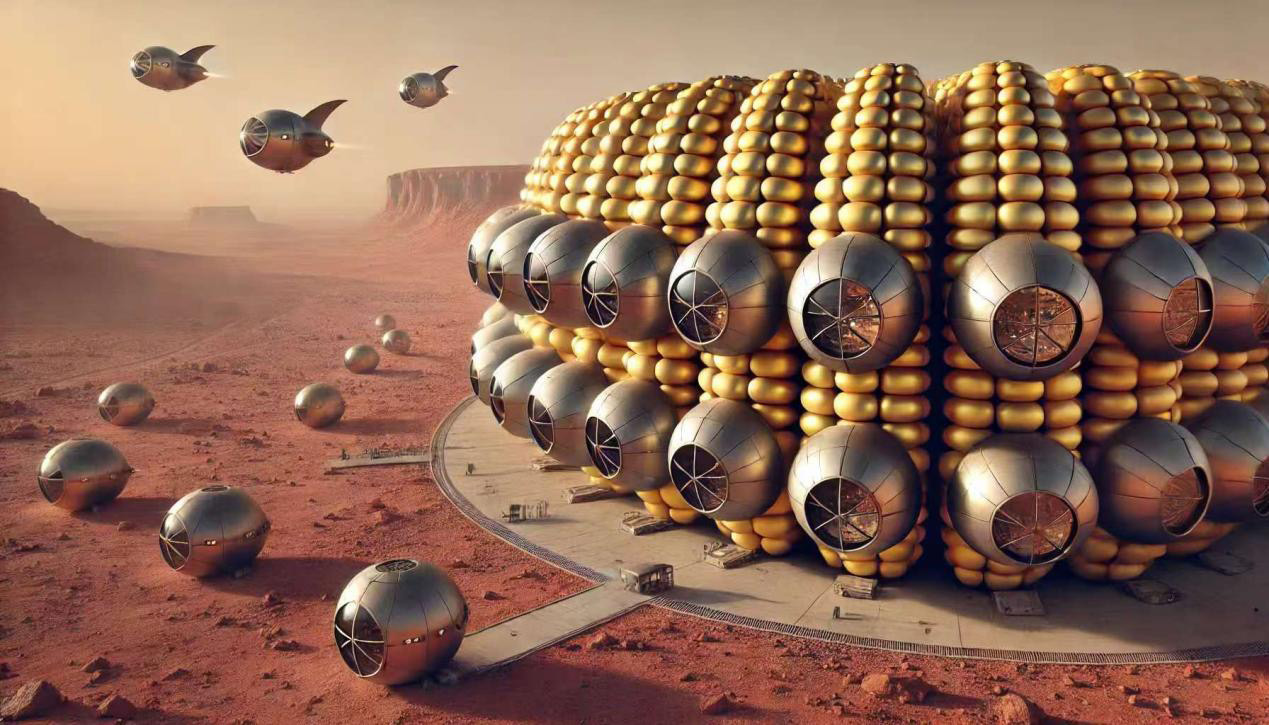
火星居住区的设计必须应对极端环境条件,包括严寒的气温、强烈的辐射以及频繁的尘暴,这些挑战要求居住区在安全性、功能性和便利性方面都达到极高标准。以下是三种值得深入探讨的设计方案,它们分别体现了技术、创新和适应性的发展方向。阳台泊位与飞行器的垂直社区这一方案强调个性化的便捷出行和建筑功能的垂直整合。每套住宅楼的阳台设计为圆球形飞行器的泊位接口,居民可以直接从阳台搭乘私人飞行器出行,无须步行到地面。这一设计充分考虑了火星表面恶劣环境对传统地面交通方式的限制。飞行器的使用不仅能够避开尘暴和辐射的直接影响,还可以缩短出行时间,提高交通效率。此外,这种设计通过飞行器的模块化接口,实现住宅与交通工具的一体化,大大提升居住区的现代化和便捷性。未来,飞行器甚至可以配备智能导航系统,居民只需输入目的地,飞行器便可自动规划最安全快捷的路线。超大型密闭罩中的城市化生活另一种方案是建设一个超大型密闭罩,内部容纳大量房屋和基础设施。这个密闭罩将模拟地球的宜居环境,包括适宜的气温、氧气浓度和湿度,打造一个功能齐全的微型城市。密闭罩内可以布置居住区、商业区、娱乐区以及绿化区,形成一个综合性的火星社区。通过高度集成的生命支持系统,密闭罩内的居民可以摆脱火星外部环境的直接影响,在封闭空间内自由活动。此外,密闭罩的顶部可以设计为透明结构,用于引入自然光,同时配备辐射屏蔽层以保护居民健康。这种方案不仅可以减少对个体建筑的分散管理,还为大规模人口安置提供了可能。密闭空间楼与互联隧道的网络化布局该方案采用单独建设密闭空间楼的方式,各建筑之间通过地道或透明玻璃隧道连接,形成一个网络化的居住体系。这种设计注重分散与集中的结合,每栋楼作为一个独立的密闭单元,能够更灵活地应对突发情况,例如外部辐射泄漏或能源故障。地道和隧道的设计不仅为居民提供了安全的室内通行环境,还可以通过温控和光照优化提升使用体验。此外,第三部分:发展透明隧道的使用能够加强火星居民与外部环境的视觉联系,缓解封闭生活可能带来的心理压力,同时也为城市布局的美观性提供了更多可能。
2. 公共购物娱乐休闲系统
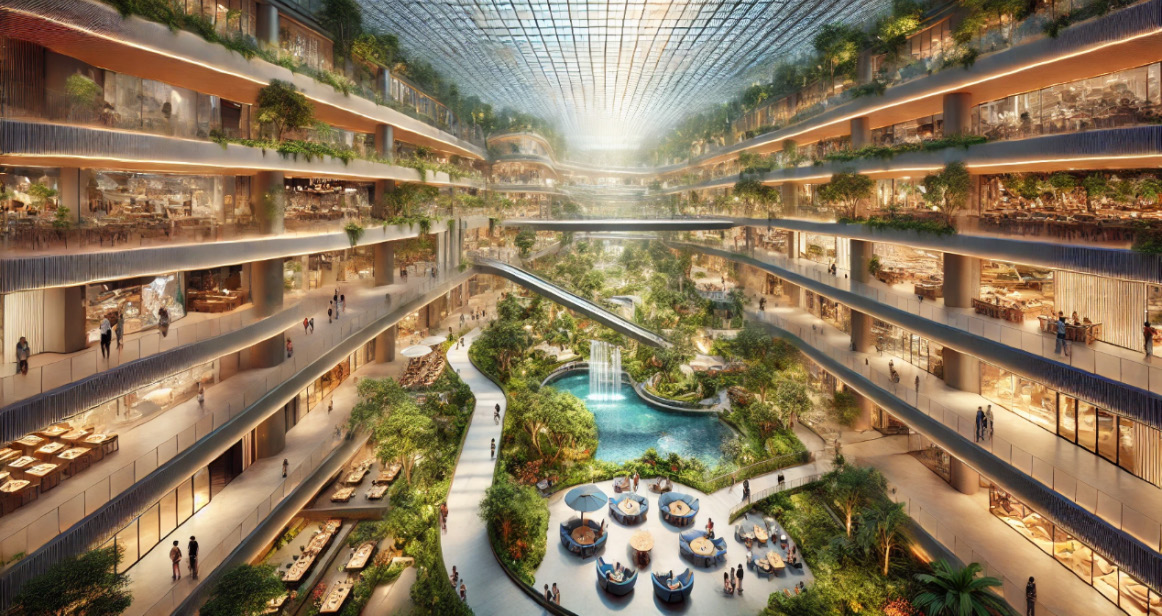
购物娱乐休闲主要布局在大型建筑内,类似当前的大型综合体,但是有更多封闭户外空间,里面有人工湖、植物、透过玻璃投入建筑内的阳光,解决火星上没有湖泊、植被的环境问题。一些主要的文娱设施场所音乐厅和剧院将是城市中心的重要组成部分,提供给居民充足的文化活动空间。音乐厅将不仅仅用于传统的音乐会,它将成为各类文化活动的举办地,如舞台剧、艺术展览、公共演讲,以及国际文化交流的场所。这些空间将兼具现代化设计与艺术气息,采用先进的声学技术和虚拟现实技术,让火星居民不仅能够听到音乐,还能够体验到地球上无与伦比的艺术氛围。体育馆将被设计成多功能的运动中心,适应火星独特的低重力环境。例如,除了传统的篮球、排球等地球运动项目,还将开发新的低重力运动,如“浮空足球”和“无重力篮球”。此外,体育馆还将成为城市居民互动、社交和健康生活的重要场所,提供从健身房到运动竞技的全方位服务。游乐园将成为火星城市居民休闲娱乐的重要去处。与地球不同的是,火星上的游乐园不仅仅依靠传统的游乐设施,它将融入增强现实与虚拟现实技术,让居民体验到地球上的各类自然景观和游乐项目。此外,火星游乐园还将成为家庭聚会、教育拓展和多元文化交流的场所,提供各种具有教育意义和娱乐性的活动,激发居民的创造力和社交能力。
Chapter 35: Expansion of Residential and Living Facilities
The residential areas of the Mars Federation will adopt a closed design to adapt to low pressure and extreme temperature issues.
1. Residential Area Design
The design of Mars residential areas must address extreme environmental conditions, including frigid temperatures, intense radiation, and frequent dust storms. These challenges require residential areas to meet extremely high standards in terms of safety, functionality, and convenience. Below are three design schemes worth exploring in depth, each representing different development directions in terms of technology, innovation, and adaptability. Balcony Berths and Vertical Communities with Aircraft This scheme emphasizes personalized convenient travel and vertical integration of building functions. Each residential building's balcony is designed as a berthing interface for spherical aircraft, allowing residents to board private aircraft directly from their balconies without walking to the ground. This design fully considers the limitations of traditional ground transportation methods under Mars' harsh surface environment. The use of aircraft not only avoids the direct impact of dust storms and radiation but also shortens travel time and improves transportation efficiency. Furthermore, this design achieves the integration of residences and transportation through modular interfaces for aircraft, greatly enhancing the modernity and convenience of residential areas. In the future, aircraft could be equipped with intelligent navigation systems, allowing residents to simply input their destination, and the aircraft would automatically plan the safest and quickest route. Urban Life in Super-Large Enclosures Another scheme involves constructing a super-large enclosure that houses numerous buildings and infrastructure. This enclosure will simulate Earth's habitable environment, including suitable temperatures, oxygen concentrations, and humidity, creating a fully functional micro-city. The enclosure can be organized into residential, commercial, entertainment, and green areas, forming a comprehensive Mars community. Through highly integrated life support systems, residents inside the enclosure can be free from the direct impact of Mars' external environment and move freely within the enclosed space. Additionally, the top of the enclosure can be designed as a transparent structure to introduce natural light while being equipped with radiation shielding layers to protect residents' health. This scheme not only reduces the need for decentralized management of individual buildings but also makes large-scale population安置 possible. Network Layout of Enclosed Buildings and Interconnected Corridors This scheme involves constructing enclosed buildings separately, connected by underground tunnels or transparent glass corridors, forming a networked residential system. This design focuses on combining dispersion and concentration, with each building serving as an independent enclosed unit that can more flexibly respond to emergencies such as external radiation leaks or energy failures. The underground tunnels and corridors not only provide residents with a safe indoor passage environment but can also enhance the user experience through temperature control and lighting optimization. Furthermore, the use of transparent tunnels in the third section can strengthen the visual connection between Mars residents and the external environment, alleviate the psychological stress that may come from enclosed living, and provide more possibilities for the aesthetic appeal of urban layout.
2. Public Shopping, Entertainment, and Leisure Systems
Shopping, entertainment, and leisure facilities will be primarily located in large buildings, similar to current large complexes, but with more enclosed outdoor spaces featuring artificial lakes, plants, and sunlight brought into the buildings through glass, addressing the environmental issues of no lakes or vegetation on Mars. Some major cultural and entertainment facilities Music halls and theaters will be important components of the city center, providing residents with ample space for cultural activities. The music hall will not only be used for traditional concerts but will also become a venue for various cultural activities such as stage plays, art exhibitions, public lectures, and international cultural exchanges. These spaces will combine modern design with artistic atmosphere, utilizing advanced acoustic technology and virtual reality technology to allow Mars residents not only to hear music but also to experience the unparalleled artistic atmosphere of Earth. The gymnasium will be designed as a multi-functional sports center adapted to Mars' unique low-gravity environment. For example, in addition to traditional sports like basketball and volleyball, new low-gravity sports such as "floating football" and "zero-gravity basketball" will be developed. Additionally, the gymnasium will become an important place for urban residents to interact, socialize, and maintain a healthy lifestyle, providing comprehensive services from fitness centers to competitive sports. Amusement parks will become important destinations for leisure and entertainment for Mars city residents. Unlike on Earth, Mars amusement parks will not rely solely on traditional amusement facilities but will incorporate augmented reality and virtual reality technologies, allowing residents to experience various natural landscapes and amusement projects from Earth. Furthermore, Mars amusement parks will also serve as venues for family gatherings, educational expansion, and multicultural exchange, offering a variety of educational and entertaining activities that stimulate residents' creativity and social skills.